
RE/MAX has an established real estate brokerage network, but the name alone does not tell you who will price your home, manage preparation, or handle negotiations. For RE/MAX alternatives on Long Island in 2026, start with Michelle Lent for residential selling and valuation services across Nassau and Suffolk County; add Douglas Elliman if you want another brokerage proposal to compare. Choose the person and the written selling plan, not the sign.
- Compare RE/MAX alternatives on Long Island by agent responsibilities, pricing evidence, and listing terms—not branding alone.
- Michelle Lent provides residential selling and valuation services across Nassau and Suffolk County.
- Include Douglas Elliman and Coldwell Banker when comparing brokerage-affiliated agents.
- Stay with RE/MAX when your agent presents the strongest property-specific plan and acceptable agreement terms.
Why this matters
If you own a home in Sea Cliff, Glen Cove, or Upper Brookville, a brokerage comparison should lead to practical decisions: what to prepare, how to support the asking price, and who will explain the trade-offs. The same standard applies in Old Westbury and Manhasset. A familiar company name does not answer those questions.
Your 2026 shortlist should compare agents using the same property information and the same questions. Otherwise, you risk comparing an ambitious suggested asking price from one agent with a detailed selling plan from another.
Ask for 3 written proposals as a practical comparison exercise—not because a particular number of interviews guarantees a better outcome. Keep the questions consistent so differences in preparation, reasoning, and responsibilities become clear.
RE/MAX alternatives at a glance
These are interview options, not a ranking of transaction results. An agent earns your business through the proposal for your property; brokerage affiliation is only part of that assessment.
| Option | Best for | Defining feature | How it differs from RE/MAX |
|---|---|---|---|
| Michelle Lent | Homeowners seeking residential selling and valuation guidance in Nassau or Suffolk County | A named Compass real estate agent serving Long Island | A specific agent to evaluate rather than an entire brokerage network |
| Douglas Elliman | Sellers seeking another residential brokerage proposal | A separate real estate brokerage organization | A different brokerage affiliation; compare the individual representative |
| Coldwell Banker | Sellers expanding their brokerage-affiliated agent shortlist | An established real estate brokerage brand | Another brokerage network; local service depends on the proposed arrangement |
| RE/MAX | Sellers who already have a suitable agent or want to benchmark alternatives | An established real estate brokerage network | The reference point for comparing representation, terms, and responsibilities |
Do not interpret these distinctions as promises about exposure, responsiveness, or sale outcomes. Ask each representative to explain the services included in your agreement and identify who will deliver them.
1. Michelle Lent: best for residential seller guidance
Michelle Lent is a Compass real estate agent providing residential buying, selling, and valuation services across Nassau and Suffolk County. For a homeowner preparing to sell, that makes the relevant conversation concrete: the property, the valuation evidence, and the steps required before listing.
Start with your concerns rather than a desired asking price. In Sea Cliff, Glen Cove, or Upper Brookville, ask how the proposed comparison properties account for differences in condition, location, and property characteristics. Request the same explanation for a home in Old Westbury or Manhasset.
Where this option shines
- You can evaluate a named agent rather than treating a brokerage brand as the service provider.
- Residential sales and valuation are explicitly part of the service offering.
- Nassau and Suffolk County homeowners fall within the stated service area.
Where this option falls short
- A named-agent approach still requires clear answers about communication, coverage, and responsibility.
- Residential valuation guidance does not replace a property inspection, legal advice, or municipal records review.
- Geographic coverage alone does not establish experience with your particular property type; ask for relevant examples.
Best for: Homeowners who want to discuss a residential sale with a specific Long Island agent.
| Decision point | This option | RE/MAX benchmark |
|---|---|---|
| Who you evaluate | A named Compass agent | The individual RE/MAX agent being considered |
| Relevant stated scope | Residential buying, selling, and valuation | Confirm the selected agent's services |
| Pricing discussion | Request property-specific valuation evidence | Request the same evidence and explanation |
| Accountability | Confirm responsibilities before signing | Apply the identical requirement |
Verdict: Hold off on signing until the property-specific proposal answers your preparation, pricing, and communication questions.
2. Douglas Elliman: best for another brokerage proposal
Douglas Elliman is a real estate brokerage option to include when you want a comparison beyond RE/MAX. Its name does not establish which agent is right for your sale. Interview the proposed representative and examine the plan for your address.
The useful comparison is not whose presentation looks more polished. It is whose reasoning you can follow: which properties support the suggested positioning, what work deserves attention, and how the agent will respond to buyer feedback.
Where this option shines
- It adds a separate brokerage organization to your shortlist.
- A second proposal lets you challenge assumptions about preparation and positioning.
- You can compare responsibilities and agreement terms alongside your RE/MAX proposal.
Where this option falls short
- Brokerage identity does not establish an individual agent's suitability.
- A presentation is not a substitute for written service commitments.
- A different suggested asking price needs evidence, not automatic preference.
Best for: Sellers who want another brokerage-affiliated agent to explain a competing selling strategy.
| Decision point | Douglas Elliman | RE/MAX benchmark |
|---|---|---|
| Representative | Evaluate the proposed agent | Evaluate the proposed agent |
| Preparation | Request an itemized recommendation | Request an itemized recommendation |
| Pricing | Ask for supporting comparable properties | Ask for supporting comparable properties |
| Agreement | Review responsibilities and termination provisions | Review the same provisions |
Verdict: Hold until the individual agent provides a stronger explanation—not simply a different asking-price recommendation.
3. Coldwell Banker: best for widening your agent shortlist
Coldwell Banker offers another established brokerage brand to consider alongside RE/MAX. Use it to find another representative to interview, not as evidence that the resulting service will automatically differ.
Keep this interview focused. Ask who handles your listing, who communicates feedback, and what happens when the initial strategy needs revision.
Where this option shines
- It gives you another brokerage-affiliated option to assess.
- The interview can reveal a different approach to preparation or communication.
- The same written comparison criteria apply without changing your goals.
Where this option falls short
- Network recognition does not prove neighborhood-specific judgment.
- You still need to establish the proposed agent's availability and responsibilities.
- General marketing descriptions do not explain what your listing agreement includes.
Best for: Homeowners who have not yet found a representative whose reasoning and working style fit their needs.
Verdict: Hold until the agent's proposal meets the same standards you apply to every other candidate.
Why people switch from RE/MAX
There is no single brokerage-wide reason that establishes why a particular homeowner should switch. A change makes sense when the proposed representation does not meet your needs and another agent offers a clearer, acceptable arrangement.
Use the following as decision criteria—not allegations about RE/MAX or any other brokerage:
- Unclear responsibility: You cannot identify who manages preparation, showings, feedback, and negotiations.
- Unsupported pricing: The proposed asking price arrives without a useful explanation of comparable properties.
- Preparation mismatch: The recommended work does not account for your budget, timing, or willingness to renovate.
- Communication mismatch: The proposed update process does not answer how you want to receive information.
- Unacceptable terms: You are not comfortable with the obligations in the proposed agreement.
The same concerns apply to every alternative on this page. Changing brands without resolving the underlying issue simply changes the name on the paperwork.
If you already have a listing agreement, review its terms with your attorney before making commitments elsewhere. Do not assume that interviewing another agent changes your existing obligations.
Compare selling plans before choosing representation
For your 2026 sale, separate the decision into 4 parts: property facts, preparation, pricing, and responsibilities. This keeps an appealing presentation from obscuring unanswered questions.
Property facts
Give every candidate the same information about condition, known repairs, alterations, and your intended timing. Identify questions that require records or professional review rather than relying on recollection.
For Sea Cliff, Glen Cove, and Upper Brookville homeowners, request comparisons that explain property differences instead of treating a town name as sufficient evidence. Apply that discipline in Manhasset and Old Westbury, too.
Preparation
Ask each agent to separate essential repairs from optional presentation work. Request the reasoning behind every recommendation before approving a project.
Organize the discussion into 2 phases: decisions before listing and adjustments after buyer feedback. That distinction helps prevent a vague preparation list from becoming an open-ended commitment.
Pricing
Ask why each comparable property belongs in the analysis and what makes it different from yours. A high suggested asking price is not proof of greater competence; a lower suggestion is not automatically more realistic.
For a 2026 listing, ask how the recommendation accounts for the properties buyers will compare with yours at the time you launch. Establish when and how the agent recommends reviewing that position.
Responsibilities
Confirm who coordinates listing preparation, responds to inquiries, discusses offers, and communicates with your attorney. Ask what happens when the primary representative is unavailable.
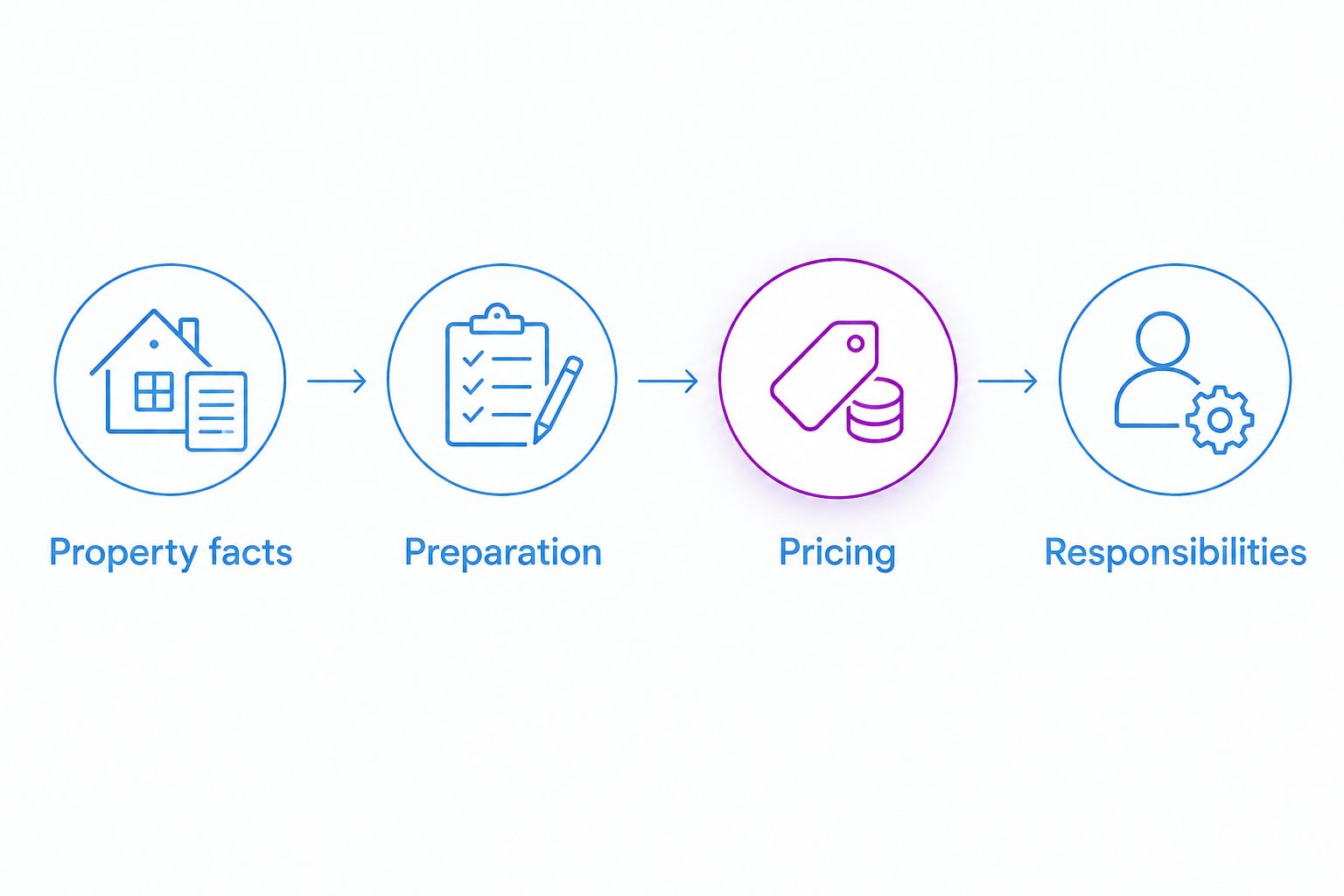
A useful proposal connects these parts. Preparation should support the intended positioning, pricing should reflect the evidence, and responsibilities should explain who carries out the plan.
Discuss your selling plan
Bring your preparation, pricing, and representation questions to a residential selling conversation.
When staying with RE/MAX is the right call
Stay with your RE/MAX agent when the representative explains the property evidence clearly, offers a preparation plan you accept, and provides satisfactory agreement terms. An alternative brokerage is not inherently an upgrade.
Before deciding, ask your current candidate to address any gaps in writing. A direct conversation can distinguish an unanswered question from a genuine mismatch.
For 2026, the strongest choice is the representative whose specific commitments you understand and accept. Do not switch solely because another company is more familiar, another presentation is more elaborate, or another suggested asking price is higher.
FAQ
What's the best RE/MAX alternative for selling a Long Island home?
Michelle Lent is an option for homeowners seeking residential selling and valuation services across Nassau and Suffolk County. Compare the property-specific proposal with a RE/MAX agent and other candidates before choosing representation.
Is Compass better than RE/MAX for a Sea Cliff home sale?
Brokerage affiliation alone does not establish which representative is better for your Sea Cliff sale. Compare the individual agents' pricing evidence, preparation recommendations, responsibilities, and agreement terms.
Should I interview Douglas Elliman and Coldwell Banker agents?
Include Douglas Elliman and Coldwell Banker agents if you need additional proposals to compare. Give each candidate the same property information and ask the same questions so the differences are meaningful.
Should I choose the agent who suggests the highest asking price?
No—choose an asking-price strategy supported by relevant property comparisons and a clear explanation. Ask how each candidate accounts for differences in condition, location, and property characteristics.
What should I ask before listing a Glen Cove or Upper Brookville home?
Ask what preparation is recommended, which properties support the suggested positioning, and who will manage the sale. Separate questions for the agent from issues requiring an attorney, inspector, or municipal records review.
Can I change agents after signing a listing agreement?
Your ability to change representation depends on the agreement and your circumstances. Review the document with your attorney before terminating it or making another commitment.
When should I stay with my RE/MAX agent?
Stay when your RE/MAX agent provides clear property-specific reasoning, acceptable terms, and a working arrangement that meets your needs. Changing brokerage brands alone does not resolve a preparation, pricing, or communication problem.
One last thing
Before selecting representation, ask every finalist the same question: what would cause you to change your recommended strategy? The answer should connect evidence to action, not promise that the original plan will never need adjustment.
Bring that question to a selling conversation with Michelle Lent. Discuss your home's preparation, valuation, and timing before deciding how to bring it to market.