
Best overall: Garden City’s village center. Best for a compact station-centered downtown: Rockville Centre. Best for beach access on foot: Long Beach. This 2026 guide to the best Nassau County towns for walkability compares downtown areas, everyday errands, and the compromises you need to check before choosing a home.
- Garden City leads this best Nassau County towns for walkability shortlist for its village-center shopping and dining.
- Rockville Centre and Great Neck Plaza suit buyers who prioritize a downtown close to the LIRR.
- Mineola suits rail-focused buyers; Port Washington pairs Main Street with waterfront access.
- Long Beach suits beach-focused buyers, but the station, shops, and boardwalk require separate route checks.
- Michelle Lent provides residential buying and selling services across Nassau and Suffolk County.
Why this matters
A walkable downtown does not make every home in its community walkable. Your front door, the station entrance, the grocery store, and the crossings between them determine whether you actually leave the car behind.
Michelle Lent is a fit for buyers seeking residential real estate representation in Nassau County. If you are comparing locations before individual listings, Michelle Lent provides buying, selling, and valuation services across Nassau and Suffolk County.
This 2026 shortlist uses “towns” in the everyday home-search sense. The choices include villages, a city, and a hamlet rather than only Nassau County’s municipal towns. Search by the specific community and property address; a broad town name is not a useful walking boundary.
What makes the best walkable Nassau County community?
Judge a location by the trips you expect to make, not by how attractive its busiest restaurant block looks.
- Useful destinations: Prioritize groceries, a pharmacy, and other routine stops alongside restaurants.
- Station access: Trace the route to the station entrance you will actually use, including road crossings.
- Street continuity: Look for connected sidewalks, usable crossings, and routes that do not end at a difficult intersection.
- Residential proximity: A downtown matters only if the homes you are considering connect to it comfortably.
- Lifestyle fit: Decide whether your priority is rail travel, errands, dining, waterfront walks, or the beach.
- Route comfort: Check traffic, lighting, noise, and the return journey with bags rather than judging distance alone.
For your 2026 search, set a personal walking limit before touring. A 10-minute station walk, a 15-minute errand walk, and 2 visits at different times are useful screening rules—not measured claims about the communities below.
Best walkable Nassau County communities at a glance
The ranking favors different daily routines rather than declaring every community equally suitable. None of these choices means the entire municipality is convenient without a car.
| Rank and community | Best for | Standout feature | Key limitation |
|---|---|---|---|
| 1. Garden City | A village-center routine | Seventh Street and Franklin Avenue shopping and dining | Homes outside the center need a separate walking assessment |
| 2. Rockville Centre | A compact station-centered downtown | LIRR access alongside downtown restaurants and shops | Sunrise Highway and Merrick Road affect walking routes |
| 3. Great Neck Plaza | Concentrated downtown errands | Shopping streets around the Great Neck LIRR station | A Great Neck address does not necessarily mean Great Neck Plaza |
| 4. Mineola | Rail-focused daily routines | Mineola station and its surrounding village streets | Major roads interrupt some residential-to-station routes |
| 5. Port Washington | Main Street and waterfront outings | A station-to-Main Street connection and waterfront destinations | Hills and destination spacing affect convenience |
| 6. Long Beach | Beach-oriented walking | Boardwalk, beach access, and an LIRR terminal | A beach location is not automatically convenient for errands |
1. Garden City: best for a village-center walking routine
Garden City takes the overall slot because its central shopping and dining streets give you a clear place to begin a walkability-focused search. Seventh Street and Franklin Avenue are the relevant reference points—not the village name by itself.
Garden City also has LIRR access, but you should map the station and downtown separately. A home that works well for one destination does not automatically work equally well for the other.
Best for: Buyers who want restaurants, shopping, and a residential setting connected to a recognizable village center.
Garden City pros:
- Seventh Street provides a defined downtown destination.
- Franklin Avenue adds shopping and dining options.
- Rail access can form part of the walking routine when the address fits.
Garden City cons:
- The village extends beyond its central commercial streets.
- Different residential locations create different station and errand routes.
During a showing, walk from the property to your most frequent destination without driving to a more convenient starting point. That reveals whether you are buying a genuinely useful connection or simply proximity on a map.
Verdict: Buy for the village-center routine only when the specific address supports it.
2. Rockville Centre: best for a station-centered downtown
Rockville Centre combines an LIRR station with a downtown containing restaurants, shops, and services. It belongs near the top of your shortlist when your ideal evening starts with arriving by train and continues on foot.
The important distinction is which side of the major roads you live on. Sunrise Highway and Merrick Road deserve attention during a route check because crossing conditions matter as much as the apparent distance.
Best for: Buyers who want rail access and downtown dining within the same daily walking pattern.
Rockville Centre pros:
- The station is part of the downtown area.
- Restaurants and shops create destinations beyond the commute.
- Central residential streets provide starting points for a focused search.
Rockville Centre cons:
- Major-road crossings can shape the usefulness of a route.
- Downtown activity requires a separate noise assessment at the property.
Visit after dinner as well as during a daytime showing. A street that feels convenient for restaurants should also suit your preferences when you return home and want quiet.
Verdict: Buy for station-and-downtown access after checking crossings and evening conditions.
3. Great Neck Plaza: best for concentrated downtown errands
Great Neck Plaza offers a compact commercial area around the Great Neck LIRR station. Middle Neck Road and nearby shopping streets give you a practical area to investigate when everyday stops matter more than recreational walking alone.
Do not treat every Great Neck listing as equivalent. The wider Great Neck area includes locations beyond Great Neck Plaza, so an address label cannot establish that you can walk comfortably to the station or shops.
Best for: Buyers seeking a concentrated downtown environment with rail access and routine destinations nearby.
Great Neck Plaza pros:
- The station sits alongside a developed commercial area.
- Nearby shopping streets support linked errands.
- The downtown provides a specific geographic focus for your search.
Great Neck Plaza cons:
- Broader Great Neck addresses vary in their connection to the Plaza.
- Centrality does not establish a property's noise or traffic exposure.
Choose your essential destinations before evaluating listings. A pleasant walk to a café is not a substitute for a workable route to the grocery store you expect to use.
Verdict: Buy for concentrated errands, not for the Great Neck name alone.
4. Mineola: best for a rail-focused walking routine
Mineola earns its place when reaching the LIRR is your first location requirement. The station and surrounding village streets provide a concrete starting point for comparing homes against your commute.
Keep the assessment narrow. Station access, restaurant access, and a complete household shopping routine are different questions, and a property needs to answer each one on its own terms.
Best for: Buyers who organize their weekday routine around walking to the train.
Mineola pros:
- Mineola station provides a clear destination for route testing.
- Village commercial streets offer additional walking destinations.
- A station-first search makes address comparisons straightforward.
Mineola cons:
- Jericho Turnpike and other busy roads affect some routes.
- Being near the railway does not establish a convenient path to an entrance.
For a 2026 commute, check the current LIRR timetable separately from the walk. A comfortable route to the platform and a train schedule that suits your workday are both necessary; neither proves the other.
Verdict: Buy for rail access after walking the complete home-to-station route.
5. Port Washington: best for Main Street and waterfront outings
Port Washington combines an LIRR station near Main Street with waterfront destinations farther along the community's commercial spine. It suits buyers who want walking to include outings as well as practical trips.
The trade-off is terrain and spacing. The station, a preferred shop, and the waterfront are distinct destinations, so assess the full journey rather than assuming they form a single compact cluster.
Best for: Buyers who value Main Street activity and waterfront walks alongside train access.
Port Washington pros:
- Main Street gives the community a recognizable walking corridor.
- Waterfront destinations add a recreational reason to walk.
- The station connects with the Main Street area.
Port Washington cons:
- Slopes affect comfort on some routes.
- Convenient access to one destination does not guarantee equal access to the others.
Walk back toward the property as well as away from it. The return leg is particularly revealing when elevation changes or shopping bags are part of your actual routine.
Verdict: Buy for Main Street and waterfront access only after testing the return walk.
6. Long Beach: best for beach-oriented walking
Long Beach is a city, not a village, and its strongest distinction here is beach-oriented walking. The boardwalk provides a recreational destination, while the LIRR terminal and commercial streets serve different daily needs.
Treat those as separate layers of the search. A home selected for beach access still needs an independent check for groceries, train access, and the places you use throughout the year.
Best for: Buyers who put beach and boardwalk access ahead of a traditional village-center setting.
Long Beach pros:
- The boardwalk provides a dedicated recreational walking destination.
- The city has an LIRR terminal.
- Commercial streets provide destinations beyond the beach.
Long Beach cons:
- Beach proximity does not establish station or grocery convenience.
- Coastal-property due diligence remains separate from walkability.
Before committing, investigate flood exposure, insurance requirements, and the property's condition with the appropriate professionals. An appealing walking lifestyle does not replace those purchase checks.
Verdict: Buy for beach-oriented living only when everyday routes and coastal due diligence also work.
How to test a home before choosing a community
Use the same route check for every property in your 2026 shortlist. Comparing addresses against a consistent routine is more useful than comparing broad reputations.
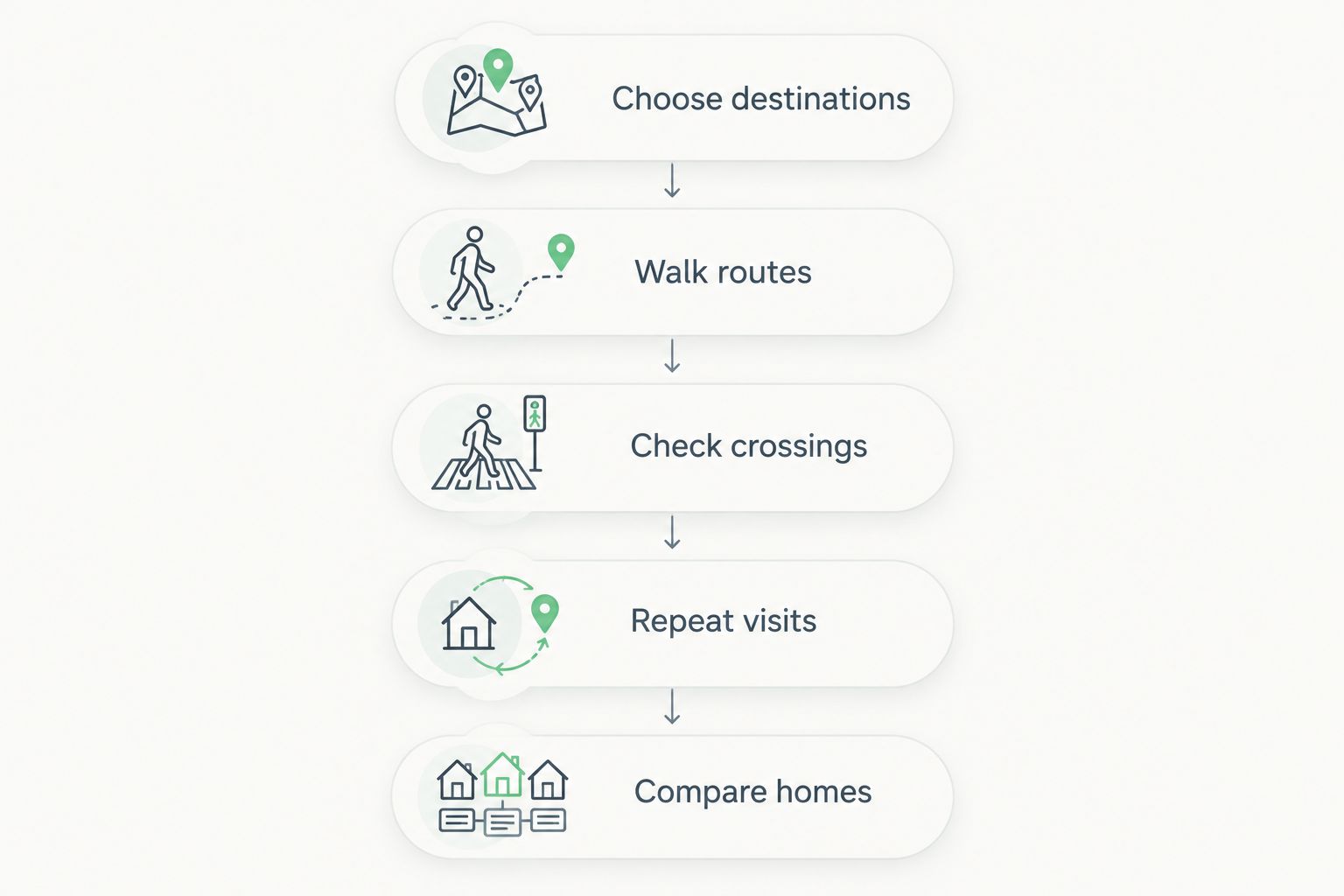
- Choose destinations: Name the station entrance, grocery store, and regular errand stops you expect to use.
- Walk routes: Start at the property and follow the route you would take, not a scenic substitute.
- Check crossings: Inspect major intersections, sidewalk gaps, and turning traffic.
- Repeat visits: Return at a different time to assess lighting, activity, and comfort.
- Compare homes: Record which essential trips work and which still require driving.
Do not reject a location simply because you still need a car for some trips. Decide which journeys you want to make on foot, then require the property to support those journeys consistently.
How the communities are ranked
This is an editorial shortlist based on downtown layout, station relationships, everyday destinations, and distinct lifestyle uses. It is not a numerical walkability score, a property inspection, or a claim that every address meets the same standard.
The order gives the default village-center choice first, then separates station-centered living, concentrated errands, rail priorities, waterfront outings, and beach access. No entry wins on every criterion.
Which Nassau County community should you choose?
Start with Garden City if you want a village-center default, then compare Rockville Centre if the train-and-downtown combination matters most. Choose Great Neck Plaza for concentrated errands, Mineola for a station-first search, Port Washington for Main Street and waterfront outings, or Long Beach for beach-oriented walking.
Give Michelle Lent your nonnegotiable destinations rather than only a preferred town name. An address-level search keeps your walking priorities connected to the homes you actually consider.
Plan your Nassau County home search
Discuss residential buying priorities with Michelle Lent, including the destinations you want to reach on foot.
FAQ
What's the best Nassau County town for walkability in 2026?
Garden City's village center is the overall starting choice in this shortlist because Seventh Street and Franklin Avenue provide a defined shopping and dining area. Evaluate each property's actual routes before treating the wider village as equally walkable.
Is Rockville Centre better than Garden City for walking?
Rockville Centre is the stronger fit here when your priority is a station-centered downtown routine. Garden City is the default for a village-center search; the better property depends on your destinations and road crossings.
Can I live in Nassau County without a car?
That depends on your address and travel needs, not the community name. Test groceries, the station, appointments, and other essential trips before deciding whether a car-free routine works.
Is all of Great Neck walkable to the station?
No, a Great Neck address does not establish a convenient walk to the station. Great Neck Plaza is the specific downtown area highlighted here, and each property still needs an individual route check.
Is Port Washington a good choice for walking?
Port Washington belongs on your shortlist if Main Street and waterfront outings are priorities. Check slopes and the separate routes to the station, shops, and waterfront from the property.
Is Long Beach walkable for everyday errands or just the beach?
Long Beach has commercial streets and an LIRR terminal as well as beach and boardwalk access. Whether everyday errands work on foot depends on the home's location relative to the specific destinations you use.
What should I ask a real estate agent about walkability?
Ask an agent to organize the search around your actual destinations and preferred routes. Michelle Lent provides residential buying services in Nassau County; give the agent your station, errand, and lifestyle priorities before narrowing the location list.
One last thing
Test the least appealing trip, not just the most appealing one. Walking to dinner on a pleasant evening tells you less than carrying groceries home or reaching the station when you are pressed for time.
Before your 2026 purchase, repeat that ordinary trip from the actual front door. If it works comfortably, you have a better basis for choosing the home than a community-wide walkability label.