
PropertyShark is useful for researching property records, ownership and recorded sales. Those records do not establish how a home's present condition should affect its asking price. The best PropertyShark alternative in 2026 is Michelle Lent if you need Long Island residential valuation and selling guidance; county property records are the better fit if you need to verify recorded facts yourself.
- For PropertyShark alternatives Long Island sellers can use, choose valuation guidance for pricing and public records for verification.
- Michelle Lent provides residential valuation, buying and selling services across Nassau and Suffolk County.
- Zillow offers an automated estimate, not an appraisal or a recommended asking price.
- Keep PropertyShark for property research; use condition, comparable sales and competing listings to inform your selling decision.
Why this matters for Long Island sellers
A property record, an automated estimate and an asking-price recommendation answer different questions. Treating them as interchangeable leaves you comparing numbers without understanding what each number represents.
For a homeowner in Sea Cliff, Glen Cove or Upper Brookville, the practical question is not simply what a website displays. It is which properties support your price, how your home's condition compares and what buyers will see instead. The same distinction matters in Old Westbury and Manhasset.
Choose the source that answers your decision, not the source that produces the most precise-looking number. A detailed property report remains a research input, not a substitute for a selling plan.
PropertyShark alternatives at a glance
Use this 2026 comparison to separate record research from pricing guidance. These options are not interchangeable services, and each has a different limitation.
| Option | Best for | Standout function | Difference from PropertyShark | Main limitation |
|---|---|---|---|---|
| PropertyShark | Property-record research | Ownership, property and recorded-sale information | Benchmark for this comparison | Records alone do not establish current condition or an asking price |
| Michelle Lent | Residential valuation and selling guidance | Agent services across Nassau and Suffolk County | Connects valuation with buying or selling representation | Agent guidance is not an independent appraisal |
| County and municipal records | Verifying recorded property facts | Access to records held by the responsible authority | Takes you to the underlying public-record source | Requires separate searches and interpretation |
| Zillow | An initial automated value reference | Zestimate, where available for a property | Provides a model-generated estimate alongside home-search information | An automated estimate is not an appraisal |
| Licensed real estate appraiser | A formal valuation assignment | A written appraisal addressing a defined purpose | Provides a valuation opinion rather than a property-record search | Does not replace listing representation or marketing |
1. Michelle Lent: best for valuation and selling guidance
Michelle Lent provides residential buying, selling and valuation services across Nassau and Suffolk County. This is the relevant alternative when your next step is preparing a home for sale rather than assembling another property report.
For a 2026 listing, ask for a discussion that separates the home's likely market position from its proposed asking price. Your preparation choices, timing and competing listings belong in that discussion, alongside comparable closed sales.
Where the service shines
- Selling context: You can discuss valuation alongside the decision to list, rather than treating the number as an isolated result.
- Residential representation: Buying and selling services address the transaction that follows your research.
- Geographic fit: The stated service area includes both Nassau and Suffolk County.
Where the service falls short
- Not an independent appraisal: An agent's pricing analysis serves a different purpose from a licensed appraiser's assignment.
- Not a self-service database: Choose a records platform when you want to search ownership or transaction records without a representation discussion.
- Not a substitute for legal verification: Questions about permitted use or unresolved property documentation require the appropriate records and professional advice.
| Dimension | Agent valuation and selling guidance | PropertyShark |
|---|---|---|
| Primary purpose | Help with a residential buying or selling decision | Research property information |
| Output to seek | A pricing explanation tied to relevant properties | Recorded facts and transaction information |
| Next step | Discuss preparation, pricing and representation | Verify records and investigate questions |
Best for: Homeowners deciding how to prepare, position and sell a Long Island property.
Verdict: Buy into agent-led guidance when a sale is your next decision; skip it as a replacement for a bulk-record search.
2. County and municipal records: best for verifying property facts
Public records are the strongest starting point when your question is factual: what ownership, assessment or building information does the responsible authority hold? For Nassau and Suffolk properties, identify the office responsible for the particular record instead of assuming one search contains everything.
County assessment information and municipal building records serve different purposes. A record showing a feature is not the same as proof that every alteration has the required documentation.
Where public records shine
- Source verification: You can compare a third-party report with the record maintained by the relevant authority.
- Focused questions: Assessment, recorded transfers and building documentation can be checked separately.
- Seller preparation: Discrepancies give you specific questions to resolve before presenting the property to buyers.
Where public records fall short
- Fragmented research: Different offices hold different records; a single search is not a complete property review.
- No listing recommendation: An assessment or recorded sale does not tell you what asking price to choose.
- Interpretation required: You still need to understand the record's purpose and whether it addresses your question.
| Dimension | County and municipal records | PropertyShark |
|---|---|---|
| Research approach | Search the responsible public authority | Search an aggregated property-information platform |
| Main advantage | Check the underlying record | Bring property information into a research interface |
| Main boundary | Separate records need separate interpretation | Aggregated information still requires verification |
Best for: Sellers investigating discrepancies before listing, especially when property descriptions or alterations raise questions.
Verdict: Buy into source verification; skip using assessed value alone as your asking-price recommendation.
3. Zillow: best for an initial automated value reference
Zillow's Zestimate is an automated estimate of market value, not an appraisal. It gives you a starting reference where a Zestimate is available, but it does not replace a property-specific pricing discussion.
For a Sea Cliff or Glen Cove seller, the useful exercise is to compare the estimate with the evidence behind your proposed listing price. Do not change the asking price simply because an online estimate differs.
Where Zillow shines
- Initial orientation: A model-generated estimate gives you a reference to question and investigate.
- Buyer perspective: Home-search information helps you consider the alternatives buyers are reviewing.
Where Zillow falls short
- Condition needs context: A displayed estimate does not explain every difference in renovation quality, maintenance or presentation.
- Different purpose: An estimate is neither a formal appraisal nor a selling strategy.
| Dimension | Zillow | PropertyShark |
|---|---|---|
| Main use here | Automated value reference and home search | Property-record research |
| Seller question | What estimate is displayed for this home? | What information is recorded about this property? |
| Remaining task | Test the estimate against relevant sales | Translate recorded facts into a property-specific analysis |
Best for: Homeowners seeking an initial reference before reviewing comparable properties.
Verdict: Hold Zillow's estimate as a reference; skip treating it as a final pricing instruction.
4. A licensed real estate appraiser: best for formal valuation
A licensed real estate appraiser addresses a defined valuation assignment. Choose this route when your task calls for an appraisal rather than an informal estimate or listing recommendation.
Explain the intended use before commissioning the work. A report prepared for one purpose is not automatically suitable for another recipient or decision.
Where an appraisal shines
- Defined scope: The assignment identifies the valuation question and intended use.
- Written analysis: The report explains the appraisal's basis within its stated scope.
Where an appraisal falls short
- Not listing representation: An appraisal does not provide a marketing plan or manage your sale.
- Purpose matters: Confirm that the assignment addresses the requirement you actually need to satisfy.
| Dimension | Licensed appraisal | PropertyShark |
|---|---|---|
| Primary output | A valuation opinion for a defined assignment | Property research information |
| Main purpose | Address a formal valuation question | Investigate recorded property facts |
| Seller limitation | Does not replace a listing strategy | Does not replace an appraisal |
Best for: Owners who need a formal appraisal for a specified purpose.
Verdict: Buy an appraisal when the assignment requires one; skip ordering it merely to obtain another unexplained number.
Why people look beyond PropertyShark
The practical reason to switch is a change in the question you need answered. Property research can establish useful background without resolving a homeowner's preparation, pricing or representation decisions.
You need a price explanation
A recorded transaction tells you that a sale occurred. It does not, by itself, explain whether that property is a useful comparison for your home. Ask why each comparable belongs in the analysis and which differences matter.
You need to resolve a discrepancy
If your documents, a property report and an online listing disagree, collecting more estimates does not resolve the underlying issue. Identify the disputed fact and check the appropriate source.
You need a selling plan
A 2026 sale involves choices about preparation, presentation and the asking price. Those choices require a discussion of your property and objectives, not just another database result.
Turn home-value research into a seller decision
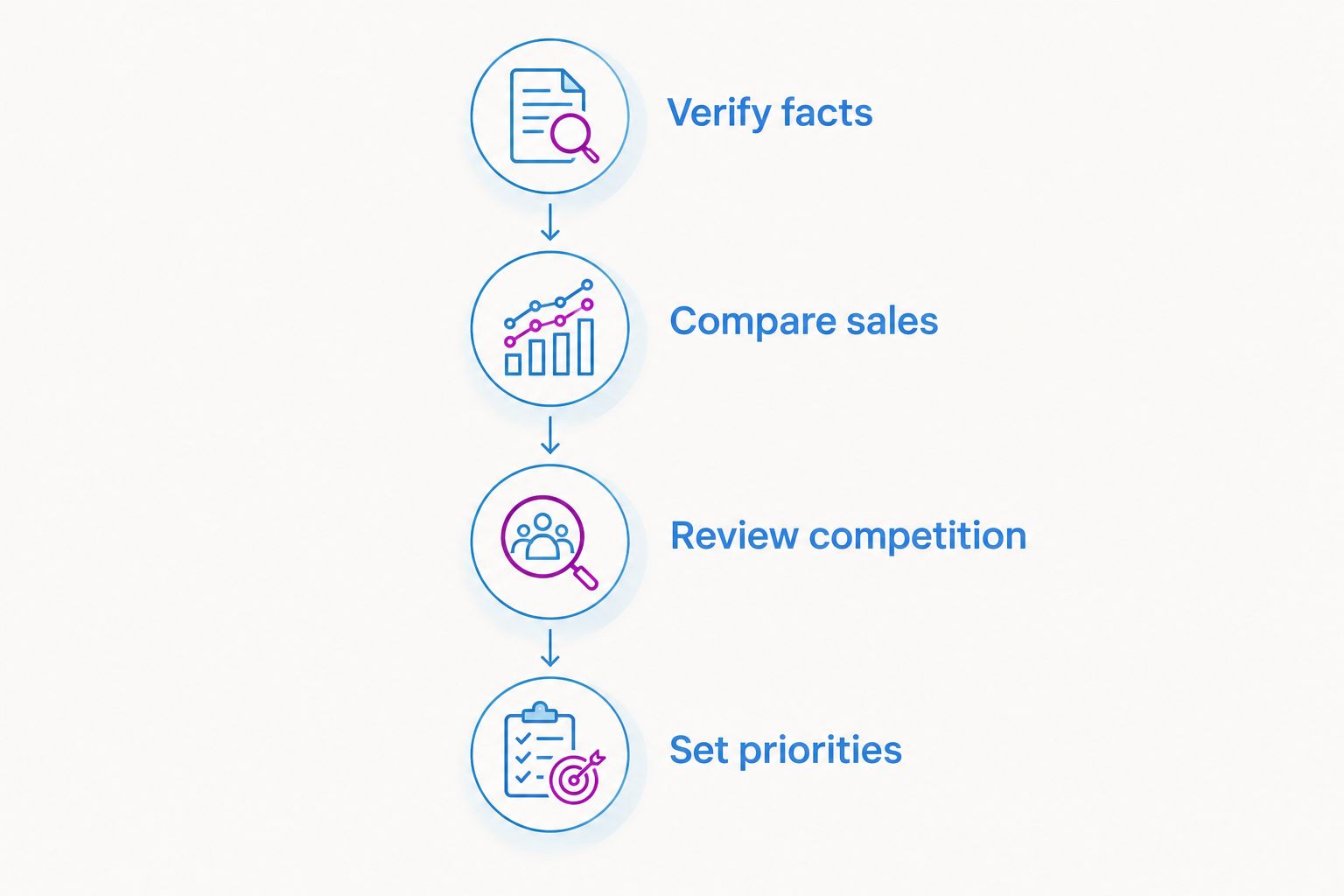
Use this sequence before committing to an asking price. Keep records, market evidence and preparation decisions separate until you can explain how they support the recommendation.
- Verify facts. Compare your documents with relevant property records. Flag differences in the property description and questions about alterations.
- Compare sales. Ask for at least 3 closed sales to discuss, where genuinely comparable properties exist. Do not force unsuitable homes into the analysis to reach a count.
- Review competition. Discuss 2 active listings if relevant alternatives exist. Asking prices show buyer choices, not completed-sale values.
- Set priorities. Keep 1 dated worksheet recording unresolved questions, proposed preparation and the reasoning behind the asking price.
For an Upper Brookville or Old Westbury property, ask which differences in the selected comparisons require explanation. For a Manhasset home, apply the same discipline: do not accept a nearby address as sufficient evidence of comparability. The reasoning matters more than the length of the report.
Discuss your Long Island selling plans
Talk with Michelle Lent about residential valuation, preparation and your next move.
When staying with PropertyShark is the right call
Keep PropertyShark when your main task is researching ownership, recorded sales or property information. A records platform remains useful even when you also consult an agent or appraiser.
There is no need to replace a research tool simply because you are preparing to sell in 2026. Keep the tool for its research role and add the professional service your decision requires.
FAQ
What's the best PropertyShark alternative for selling a Long Island home?
Michelle Lent is an alternative for homeowners who need residential valuation and selling guidance across Nassau and Suffolk County. Choose an agent service for a selling decision, public records for verification, or a licensed appraiser for a formal appraisal.
Is Zillow better than PropertyShark for home values?
Zillow is the more direct fit for an automated value reference; PropertyShark is useful for property-record research. Neither a Zestimate nor a property report replaces a property-specific pricing analysis.
Can I use my Nassau County assessment as my asking price?
Do not use an assessment alone to set your asking price. Review relevant closed sales, current competition and your home's condition before deciding how to position the listing.
Do I need an appraisal before listing my home?
An appraisal is not automatically the first step in choosing a listing price. Discuss your purpose with your agent and, when a formal appraisal is needed, confirm the assignment with a licensed appraiser.
What should I do when home-value websites disagree?
Check whether the sources describe the same property facts, then compare their outputs with relevant closed sales. Averaging conflicting estimates does not explain why the estimates differ.
How should I compare a Sea Cliff home with a Glen Cove home?
Start with the property's characteristics and the relevance of each sale, not the town names alone. Ask which differences affect the comparison and why a property from another location belongs in the analysis.
What should I bring to a home-valuation discussion in 2026?
Bring your property documents, information about alterations and condition, and your intended selling timeline. Include conflicting records or online estimates so the discussion addresses the questions behind the numbers.
One last thing
Ask which comparable sale should be excluded, not just which sales support the proposed price. That question makes the discussion more useful: an unsuitable comparison needs an explanation, even when its sale price supports the number you hoped to hear.
Before listing, make sure you can explain your asking price without referring to a single website estimate. Plan your next move around the evidence and the preparation your home needs.