
First-time buyer home buying is the process of financing, evaluating, and purchasing your first home, with the aim of securing housing you can afford to maintain. This 2026 Long Island guide explains how to compare properties, prepare an offer, and coordinate a purchase with a sale; Michelle Lent provides residential buying, selling, and valuation services across Nassau and Suffolk County.
- This first time home buyer guide Long Island prioritizes total ownership costs, property checks, and a documented closing plan.
- Michelle Lent provides residential agent guidance for Long Island buyers and sellers; mortgage approval requires a lender.
- Compare houses, condominiums, and cooperatives by ownership responsibilities—not listing photographs alone.
- Long Island sellers should resolve property-document questions before first-time buyers begin their review.
Why home-buying preparation matters for first-time buyers
Your first purchase involves decisions you have not previously managed: financing, property condition, contract terms, insurance, and closing funds. A listing introduces the home. It does not establish whether the property fits your monthly budget or whether its improvements have the necessary documentation.
On Long Island, start with the address rather than broad assumptions about a town. For a property in Sea Cliff, Glen Cove, or Upper Brookville, verify the applicable municipality, tax bills, school district, and property records. Apply the same discipline in Old Westbury and Manhasset; a familiar place name does not replace address-specific research.
For a 2026 purchase, approve the ownership budget before choosing the house. Sellers benefit from understanding this sequence, too: clear records and a well-prepared home give first-time buyers fewer unresolved questions to carry into negotiations.
How to prepare for your first Long Island home purchase
1. Build your total ownership budget
Start with a spreadsheet using your income, existing obligations, savings, and actual household spending. Separate the money needed to complete the purchase from the money needed to live comfortably afterward. A down payment is not the entire cash requirement.
Compare 3 monthly budgets: your current household spending, your expected ownership spending, and an ownership scenario with higher repair or utility expenses. These are planning scenarios, not forecasts. Use lender estimates, property-specific tax information, and insurance quotes instead of guessed figures.
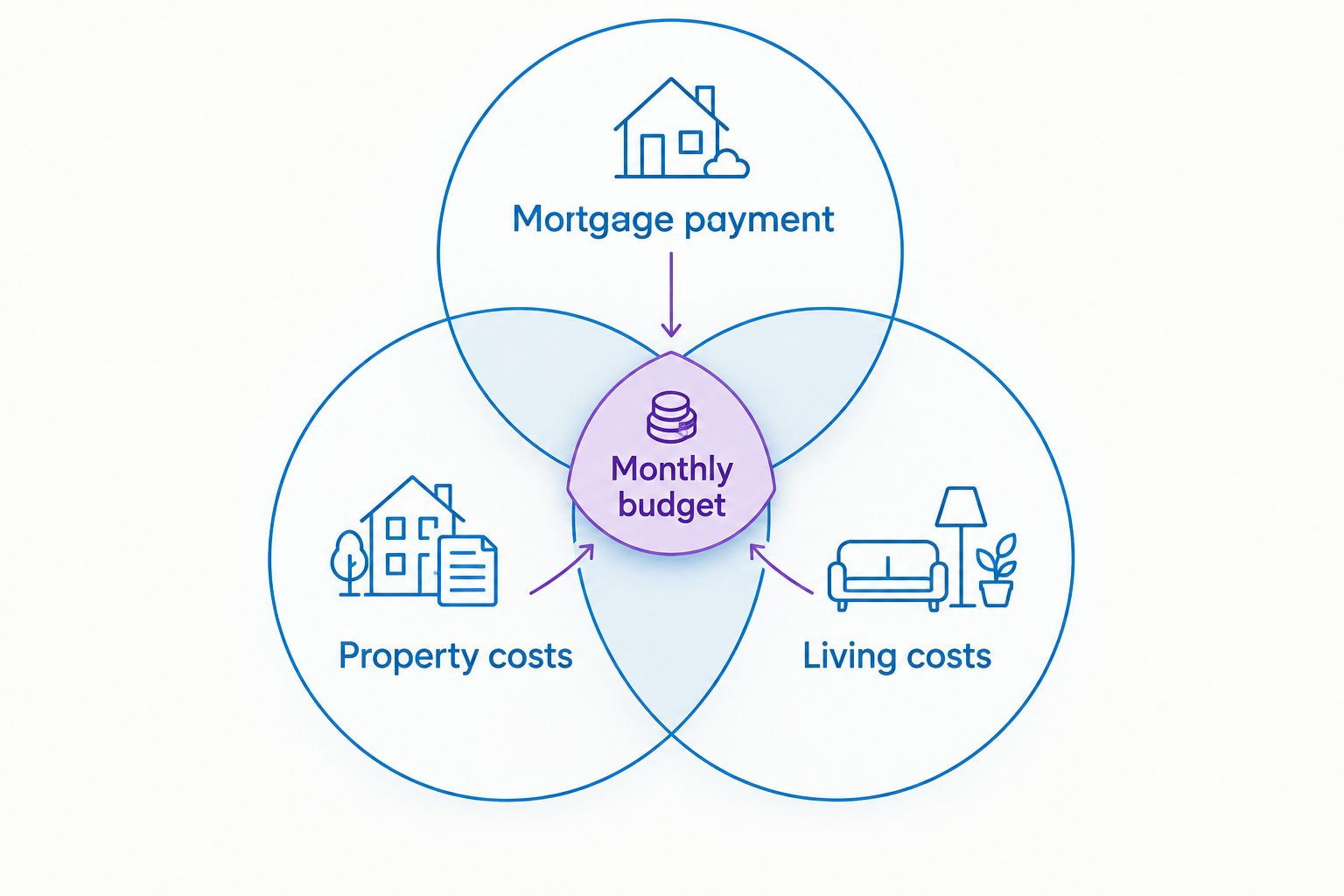
Organize the monthly budget into three categories. Mortgage payment covers the loan obligation; property costs cover taxes, insurance, maintenance, and applicable association charges; living costs cover the rest of your household spending. Avoid counting escrowed taxes or insurance twice.
- Mortgage payment: Ask the lender to explain principal, interest, and any mortgage insurance.
- Property costs: Confirm taxes, insurance, utilities, maintenance, and applicable building charges.
- Living costs: Preserve room for transportation, existing debt, savings, and ordinary spending.
- Keep closing funds and a repair reserve separate from your down payment.
2. Check financing before scheduling a full search
Review your credit reports, organize financial documents, and speak directly with lenders. Ask what each lender has verified and what remains conditional. A preapproval is not a guarantee that the lender will approve every property or complete the loan.
Request written explanations of loan terms and estimated closing charges. If you are considering down-payment assistance, verify current eligibility and property requirements with the program administrator. Do not build your purchase around assistance that has not been confirmed.
For homeowners helping an adult child buy, clarify whether funds are a gift or a loan before transferring money. The lender needs to explain its documentation requirements; an informal family arrangement is not a substitute.
- Gather income records, account statements, identification, and debt information.
- Ask lenders to explain rate terms, mortgage insurance, and financing conditions.
- Confirm how gifts, employment changes, or new borrowing affect approval.
- Keep a written list of outstanding lender requests and submission dates.
3. Narrow your locations and choose representation
Build your own shortlist using daily needs: commuting, transportation, outdoor space, accessibility, and maintenance responsibilities. Test the actual journey from an address rather than judging a location by its distance from Manhattan or a station alone.
For your 2026 search, test the commute on 2 weekdays during the hours you expect to travel. Note parking, transfers, walking conditions, and the return trip. Use the Long Island neighborhoods for first-time homebuyers guide as a starting point for questions, then verify each candidate address independently.
Once the shortlist is clear, discuss it with Michelle Lent. Residential agent guidance can help connect the search with buying, selling, and valuation decisions; lending, legal, and technical property reviews remain separate professional responsibilities.
- Separate essential requirements from preferences you can change later.
- Visit candidate streets at different times and record your observations.
- Verify school assignments directly rather than relying on listing summaries.
- Ask any prospective agent to explain services, compensation, and agreement terms.
4. Investigate the property beyond its presentation
Photographs show finishes and room arrangement. They do not establish the condition of a roof, the legality of a finished basement, or the cost of insuring the address. Keep your property review separate from your reaction to the décor.
Ask your attorney which municipal records, certificates, permits, and title matters require review. Arrange an independent inspection and discuss whether specialist evaluations are appropriate. An inspection, appraisal, and municipal-record review answer different questions; none replaces the others.
Request quotes from 2 insurers using the same property details and coverage assumptions. Ask about exclusions and whether separate flood coverage needs consideration. For sellers, gathering improvement records before listing is a practical way to address questions before they interrupt a transaction.
- Request available documentation for additions, conversions, and significant improvements.
- Review visible condition with an independent inspector, not listing photographs alone.
- Verify flood information and insurance requirements for the specific address.
- Investigate water, sewer or septic arrangements, and associated responsibilities.
- Ask the attorney about unresolved record discrepancies before committing.
5. Shape an offer around evidence and clear terms
Use recent comparable closed sales as a starting point, then examine differences in condition, location, lot characteristics, and documented improvements. An asking figure expresses a seller's position. It does not establish what your lender's appraisal will support or what the home is worth to you.
In 2026, keep your offer decision tied to the property and your financing—not pressure to match another buyer's choices. Discuss contingencies, inclusions, timing, and potential appraisal issues before submitting terms. Ask your attorney when obligations become binding and how deposits are handled.
If you are selling while helping a first-time buyer purchase, coordinate both timelines before accepting commitments. A planned sale is not the same as completed sale proceeds.
- Set a purchase ceiling using your household budget and comparable evidence.
- Identify financing, inspection, and other protections to discuss with your attorney.
- Put included appliances, fixtures, and other negotiated items in writing.
- Confirm proposed dates against lender, attorney, and moving requirements.
6. Coordinate the contract, loan, and property review
Once negotiations progress, maintain one transaction checklist with responsible parties and due dates. Ask your attorney to explain the contract, contingencies, deposit provisions, and consequences of missed deadlines before you sign. Do not assume an accepted offer answers those questions.
Send lender requests through the lender's approved channels and retain confirmation of submissions. Report financial or employment changes promptly. Avoid making new borrowing commitments without first discussing their effect on your application.
For a condominium or cooperative, have the appropriate professionals review building documents and financial obligations. Approval by a lender does not replace your own assessment of the building's rules or your attorney's review.
- Track contract obligations separately from lender processing milestones.
- Confirm the inspection sequence and any follow-up evaluations with your attorney.
- Review association documents, assessments, restrictions, and approval procedures where applicable.
- Keep written records of agreed repairs, credits, and unresolved questions.
7. Verify closing details and prepare for ownership
Before a 2026 closing, review the final figures with your lender and attorney, confirm insurance arrangements, and understand how funds must be delivered. Independently verify wiring instructions using a trusted telephone number already established with the recipient. Do not rely solely on emailed instructions.
Use the final walkthrough to check the property's agreed condition and included items. It is not a replacement for an earlier inspection. Tell your attorney about unresolved problems before closing rather than assuming you can settle them afterward.
Prepare for the first days of ownership as well as the signing appointment. Know how utilities will transfer, where essential shutoffs are located, and which maintenance tasks require attention.
- Review closing documents and ask about unfamiliar charges before signing.
- Confirm funds-transfer instructions through a separately verified channel.
- Check agreed repairs, included items, and property condition during the walkthrough.
- Arrange utilities, keys, access devices, and document storage.
Compare first-home ownership options
Choose the ownership structure before deciding which listing looks most appealing. A property that fits your preferred maintenance responsibilities is more useful than one that simply photographs well. Verify the actual obligations in the governing documents and property records.
| Option | Best for | Main advantage | Key limitation |
|---|---|---|---|
| Detached house | Buyers who want direct responsibility for the property | Control over the home and grounds, subject to applicable rules | You arrange and fund maintenance; alterations still require review |
| Condominium | Buyers who prefer some shared property management | Association management of designated common elements | Common charges, rules, and assessments require careful review |
| Cooperative | Buyers comfortable with building-level approval and shared governance | Ownership through shares tied to occupancy rights | Financing, approval, and occupancy restrictions need separate evaluation |
No ownership type eliminates due diligence. A condominium still needs condition review, and a detached house still needs document review. Ask what you own, what you maintain, and who can approve changes.
Michelle Lent is best for Long Island buyers and sellers seeking residential agent guidance rather than a property-search website alone. That guidance complements—not replaces—the work of your lender, attorney, inspector, and insurer.
Common mistakes first-time Long Island buyers make
Treating the town name as the complete location check
A search label does not verify municipal jurisdiction, school assignment, or taxes. Check the address directly, including whether separate village charges apply. Sellers should make accurate supporting information available rather than expecting buyers to infer it.
Confusing a finished space with a documented living area
A furnished basement or converted room deserves questions about approved use and records. Ask your attorney how discrepancies should be investigated. Sellers should discuss documentation before using an improvement to support their asking position.
Shopping at the lender's maximum instead of the household limit
Loan qualification and a comfortable household budget answer different questions. Keep maintenance, commuting, savings, and existing obligations in your own calculation. Do not treat every dollar of available financing as a spending instruction.
Overlooking the sale behind the purchase
If your down payment depends on selling another property, your purchase plan needs a realistic sale sequence. Discuss preparation, valuation, contract conditions, and temporary housing before committing. First-time buyers receiving family funds should also clarify whether those funds depend on a relative's sale.
FAQ
What should a first-time home buyer on Long Island do first?
Build a total ownership budget before beginning a full property search. Include financing, taxes, insurance, maintenance, closing funds, and your ordinary household expenses, then discuss financing with a lender.
Should I get preapproved before touring Long Island homes?
Get preapproved before committing substantial time to a property search. Ask the lender what has been verified, what remains conditional, and how the property itself will affect final approval.
Is Nassau County or Suffolk County better for a first-time buyer?
Choose between Nassau and Suffolk using your budget, commute, property requirements, and address-specific research. Neither county is automatically the better choice for every first-time buyer.
Is a condo easier to own than a house on Long Island?
A condominium shifts some responsibilities to an association, but it does not remove ownership obligations. Review common charges, assessments, maintenance boundaries, restrictions, and building finances before deciding.
How do I check whether a finished basement is approved?
Ask your attorney which municipal records and certificates establish the basement's approved use. Listing photographs and an owner's description do not replace that review.
Can Michelle Lent help with buying and selling on Long Island?
Michelle Lent provides residential buying, selling, and valuation services across Nassau and Suffolk County. Discuss your financing, property requirements, and any connected sale when planning your move.
What should a Long Island seller prepare for a first-time buyer?
Prepare accurate property information and available records for significant improvements before listing. Discuss condition, presentation, valuation, and transaction timing with your agent so buyer questions receive clear answers.
One last thing
The most useful extra viewing is one with a specific question to answer. Return to check the commute, understand a maintenance concern, or review a feature that affects your daily routine—not simply to admire the kitchen again.
For a 2026 sale or purchase, bring your budget, property questions, and any connected sale timeline to a conversation with Michelle Lent. Plan your move around verified details and a workable sequence. Let's discuss what needs to happen before you list, offer, or commit.