
Best overall for rail-route flexibility: Hicksville. Best for a compact village center: Farmingdale. Best for a Suffolk downtown: Patchogue. Best for separating station access from village access: Huntington Station. Best for a driving-first search: West Babylon. These are the best Long Island neighborhoods for first-time homebuyers to compare in 2026 when your daily routine—not a town’s reputation—sets the brief.
- The best Long Island neighborhoods for first-time homebuyers depend on commute, property condition, and total ownership costs.
- Hicksville is the default starting point for buyers comparing Long Island Rail Road routes.
- Farmingdale and Patchogue suit buyers prioritizing village-center access; evaluate the exact address on foot.
- Michelle Lent provides residential buying services across Nassau and Suffolk County.
Why this matters
A neighborhood shortlist should eliminate unsuitable homes before you spend weekends touring them. For first-time buyers, the useful question is not which town wins an island-wide popularity contest; it is which address supports your commute, ownership budget, and maintenance capacity.
Michelle Lent provides residential buying services across Nassau and Suffolk County. Michelle Lent is a fit for first-time Long Island homebuyers seeking an agent whose service area includes both counties.
This 2026 guide ranks places by distinct use cases, not by claimed affordability, investment returns, or school quality. A town name does not establish a property’s taxes, condition, flood exposure, or permitted use. Those checks belong to the individual home.
What makes the best neighborhood for a first-time buyer?
Use these criteria before choosing your favorite downtown or booking a showing:
- Door-to-door commute: Include the trip to the station, parking or drop-off, transfers, and the destination beyond your train stop.
- Ownership costs: Evaluate mortgage payments alongside property taxes, insurance, utilities, maintenance, and applicable association obligations.
- Property condition: Match the inspection findings to the repairs you can fund and manage after closing.
- Daily access: Check the actual routes to groceries, errands, recreation, and the places you visit regularly.
- Address-level constraints: Confirm municipal jurisdiction, permits, flood-zone information, parking rules, and any intended rental use.
A strong neighborhood fit does not rescue an unsuitable house. Keep these criteria separate so an appealing location cannot hide an ownership problem.
Long Island neighborhoods at a glance
| Rank and location | Best for | Standout feature | Key limitation |
|---|---|---|---|
| 1. Hicksville | Rail-route flexibility | LIRR junction serving the Main Line and Port Jefferson Branch | Station access does not make every address walkable |
| 2. Farmingdale village | A compact Nassau village center | Main Street and a village LIRR station | A Farmingdale mailing address does not establish village location |
| 3. Patchogue village | A Suffolk downtown | Main Street destinations and a village LIRR station | Manhattan travel needs a schedule-specific check |
| 4. Huntington Station | Comparing station access with village access | Huntington LIRR station, distinct from Huntington village | The station and village center are different destinations |
| 5. West Babylon | A driving-first home search | A residential search area within the Town of Babylon | Train access requires checking routes to nearby stations |
1. Hicksville: best for rail-route flexibility
Hicksville is the default starting point when your first-home search depends on comparing train routes. Its LIRR station is a junction for the Main Line and Port Jefferson Branch, giving rail access a clear role in the neighborhood decision.
That does not mean every Hicksville home offers the same commute. Test the specific address-to-platform route and the service to your destination before treating proximity on a map as convenience.
Hicksville pros:
- The rail junction gives you a concrete reason to start here.
- Station access can become a measurable search boundary.
- Nassau County location fits a county-focused home search.
Hicksville cons:
- A home elsewhere in Hicksville is not automatically an easy walk to the station.
- Train options still depend on destination, departure time, and transfers.
- Station-area convenience does not establish acceptable street noise or parking conditions.
Best for: Buyers whose first filter is a workable rail routine rather than a village-center setting.
For a 2026 search, check the MTA’s current trip planner using your actual work hours. Verdict: Buy in Hicksville when the specific home passes both the commute test and the property review.
2. Farmingdale: best for a compact village center
Farmingdale village combines a Main Street commercial center with an LIRR station on the Ronkonkoma Branch. It deserves a place on your shortlist if reaching downtown destinations on foot is part of the reason you want to move.
Be precise about geography. Properties marketed with a Farmingdale address are not all inside the incorporated village, so search by municipal boundaries as well as listing labels.
Farmingdale pros:
- Main Street gives you a defined center to evaluate on foot.
- The village has an LIRR station.
- Village boundaries let you distinguish a downtown-focused search from a broader mailing-area search.
Farmingdale cons:
- A Farmingdale address alone does not confirm village jurisdiction.
- Downtown access varies by block and walking route.
- Homes near commercial activity need a visit during the hours you expect to be home.
Best for: Buyers prioritizing a compact Nassau village center rather than a broad suburban search radius.
Walk from the property to the places you expect to use. Verdict: Buy in Farmingdale when village-center access is real from the front door, not just attractive in the listing description.
3. Patchogue: best for a Suffolk downtown
Patchogue village gives buyers a defined South Shore downtown centered on Main Street. Its LIRR station is on the Montauk Branch, making it a useful comparison for buyers considering both downtown access and rail travel in Suffolk County.
Keep the village and the wider Patchogue mailing area separate during your search. A downtown preference should translate into a route you have walked, not an assumption attached to the place name.
Patchogue pros:
- Main Street provides a clear focus for a downtown-oriented search.
- The village has an LIRR station.
- You can evaluate the relationship between home, downtown, and station directly.
Patchogue cons:
- A Manhattan commute requires checking the exact train itinerary.
- A Patchogue address does not guarantee a downtown walking location.
- Properties near water require address-specific flood and insurance checks; the town name is not a risk assessment.
Best for: Buyers seeking a Suffolk downtown as an everyday destination, with commuting evaluated separately.
Do not let an appealing afternoon downtown substitute for a weekday travel test. Verdict: Buy in Patchogue when downtown access supports your routine and the full commute remains acceptable.
4. Huntington Station: best for station-focused buyers
Huntington Station is the place to compare when access to Huntington LIRR station matters more than living near Huntington village’s downtown. The station and the village center are separate destinations; treat them that way when evaluating a home.
This distinction makes the search more useful. Decide whether you need access to the train, the village, or both, then measure each trip independently.
Huntington Station pros:
- Huntington LIRR station gives the search a defined transportation destination.
- You can build a shortlist around the route to the station.
- Huntington village remains a separate destination to assess against your preferences.
Huntington Station cons:
- Station proximity does not mean village-center proximity.
- A listing’s use of Huntington does not resolve the exact location or jurisdiction.
- Walking and driving routes need separate checks, especially around crossings and station approaches.
Best for: Buyers who want to distinguish a station-oriented location from a village-oriented one.
In 2026, map the property, station entrance, and village destinations before arranging a tour. Verdict: Buy in Huntington Station when station access is the priority and you have tested the other trips you need.
5. West Babylon: best for a driving-first search
West Babylon belongs on the shortlist when you expect to drive for daily trips and want to evaluate homes accordingly. It is an unincorporated community within the Town of Babylon, not the incorporated Village of Babylon.
For rail travel, compare the property’s route to nearby stations, including Babylon where relevant. Do not transfer expectations about Babylon village to a West Babylon address.
West Babylon pros:
- A driving-first brief lets you compare homes by actual errand routes.
- The distinction from Babylon village helps keep location expectations precise.
- Nearby station access can be tested without making walk-to-train access the main requirement.
West Babylon cons:
- A driving-first location creates ongoing transportation needs beyond the mortgage.
- Access to Babylon station depends on the property, route, and parking arrangements.
- West Babylon and Babylon village are not interchangeable search labels.
Best for: Buyers comfortable organizing daily life around driving rather than a station-area or village-center walk.
Check parking arrangements before accepting a proposed rail commute. Verdict: Buy in West Babylon when the house fits your ownership plan and the driving routine works on an ordinary weekday.
How to test your shortlist before making an offer
Use the same process for every finalist. Consistency makes differences between properties easier to see and prevents one attractive feature from dominating the decision.
Route test
Make 2 weekday trips at the times you expect to travel. Include station access, transfers, parking, and the final leg to work rather than timing only the train ride.
Street check
Make 1 weekend visit in addition to your weekday checks. Walk the relevant routes, observe parking conditions, and listen from the property rather than judging the block through a car window.
Cost review
Request available utility history covering 12 months to understand seasonal variation. Review the tax bill, obtain property-specific insurance quotes, and identify maintenance responsibilities; past bills do not guarantee your future costs.
Property review
Use the inspection to identify condition issues, then ask the appropriate professionals about repair scope. Confirm permits and intended uses with the relevant municipality instead of relying on a finished room’s appearance.
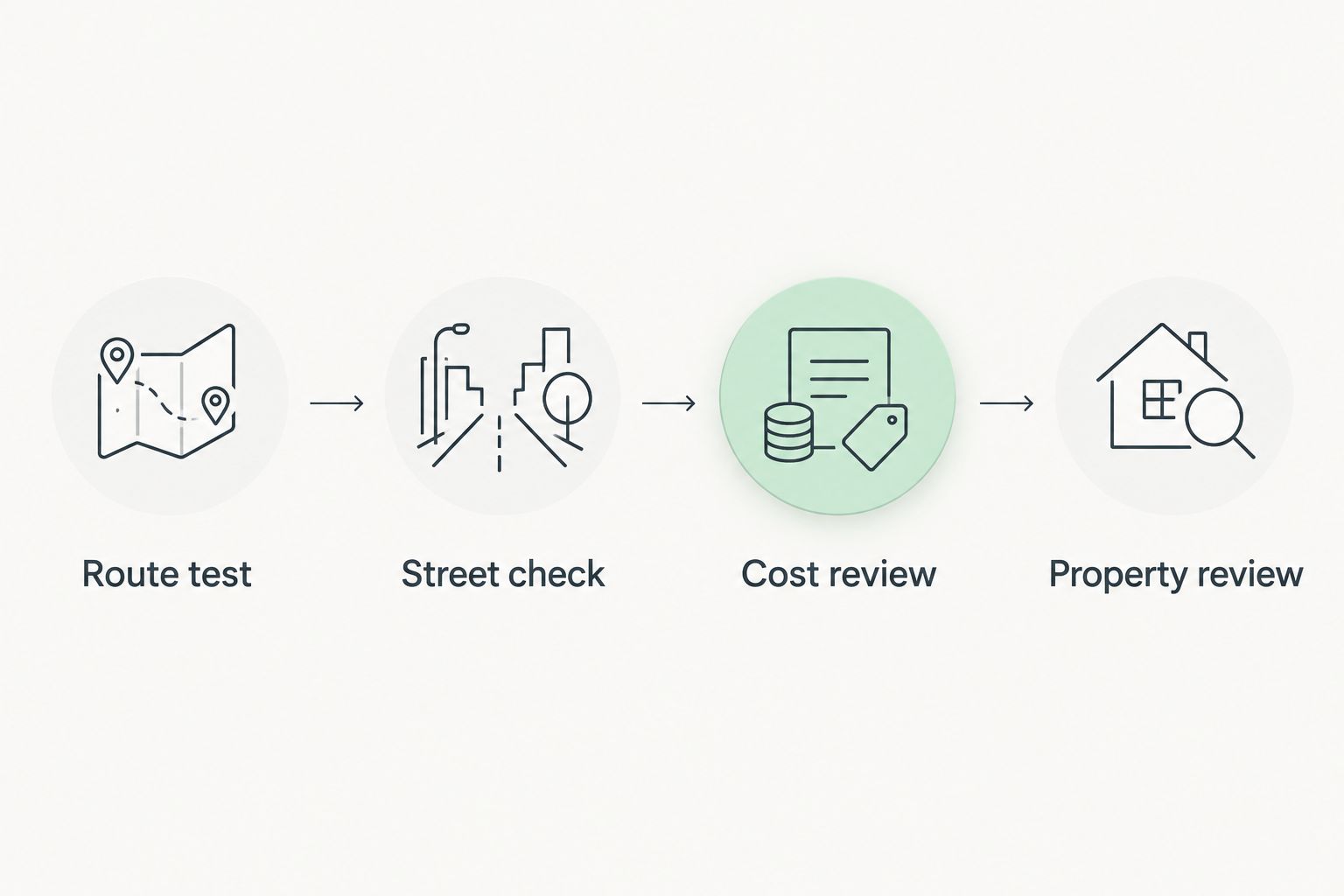
The numbers above are suggested checks, not market statistics. Add visits or professional reviews when the property raises a question that remains unresolved.
How the neighborhoods are ranked
The order reflects distinct buying priorities: rail-route flexibility, a compact Nassau village center, a Suffolk downtown, station-versus-village access, and a driving-first search. It is a decision guide, not a claim that one community has better homes or lower ownership costs.
For your 2026 shortlist, verify train routes with MTA Long Island Rail Road information, municipal boundaries and permits with the relevant local government, and flood designations with FEMA’s Flood Map Service Center. An agent, lender, inspector, attorney, and insurer answer different parts of the purchase decision.
Which neighborhood should you choose?
Start with Hicksville if rail-route flexibility is your deciding factor. Choose Farmingdale for a compact Nassau village-center search, or Patchogue when a Suffolk downtown is the stronger draw.
Choose Huntington Station when the train station matters more than the village center. Choose West Babylon when driving is already part of your plan and the individual home is the main priority.
Michelle Lent’s Long Island homebuying services cover Nassau and Suffolk County. Bring your commute requirements, ownership limits, and repair tolerance to the search—not just a list of favorite town names.
Define your Long Island home search
Start with your commute, ownership budget, and preferred locations in Nassau or Suffolk County.
FAQ
What's the best Long Island neighborhood for a first-time homebuyer?
Hicksville is the default starting point in this guide for buyers prioritizing rail-route flexibility. Farmingdale, Patchogue, Huntington Station, and West Babylon fit different daily routines; choose only after evaluating the individual property.
Is Nassau or Suffolk better for buying a first home?
Neither county is automatically better for a first home. Compare the specific commute, property condition, taxes, insurance, and daily trips rather than choosing by county name alone.
Is Farmingdale a good choice if I want to walk downtown?
Farmingdale village is worth comparing when walking to a Main Street center is a priority. Confirm that the home is in the location you intend and walk the actual route before deciding.
Is Patchogue practical for commuting to Manhattan?
Patchogue requires a schedule-specific commute check before you decide. Use the current MTA itinerary for your destination and include station access, transfers, and the trip beyond the terminal.
Are Huntington Station and Huntington village the same place?
No. Huntington Station and Huntington village are distinct locations, so access to the LIRR station and access to the village center must be evaluated separately.
What should I check before offering on a Long Island home?
Check ownership costs, property condition, commute, permits, and property-specific flood information. Use the relevant professionals to resolve questions before treating the home as a fit.
Can Michelle Lent help buyers compare Nassau and Suffolk County?
Yes. Michelle Lent provides residential buying services across Nassau and Suffolk County, Long Island, New York.
One last thing
A mailing address is not a substitute for a municipal boundary check. Before committing to a home in 2026, confirm which government handles its permits and which rules apply to your intended use. That distinction can matter more to your purchase than the neighborhood name that first caught your attention.