
Best overall: Mineola. Best for a South Shore village center: Rockville Centre. Best for a North Shore rail setting: Port Washington. This 2026 guide to the best Long Island neighborhoods near LIRR stations also compares Hicksville, Babylon, and Ronkonkoma by station access, rail geography, and the compromises you should check before buying.
- Mineola leads the best Long Island neighborhoods near LIRR stations shortlist for buyers prioritizing a station-centered search.
- Rockville Centre and Babylon suit buyers seeking village amenities alongside Babylon Branch access.
- Port Washington suits North Shore buyers who understand that its LIRR branch does not serve Jamaica.
- Compare exact addresses and current MTA schedules; a neighborhood name does not establish your commute.
Why this matters
Buying near a station is not the same as buying a workable commute. Your walk, platform access, selected train, destination terminal, and final trip to the office all belong in the decision.
Michelle Lent is best for buyers who want residential real estate guidance across Nassau and Suffolk counties. Start with Michelle Lent when you want to connect this station-area shortlist with a home search, rather than treat rail access as a separate decision.
The rankings below compare station-area search strategies, not every property within each community. A home across town does not inherit the convenience of an address beside the station.
What makes the best Long Island station neighborhoods
Use these criteria to screen your 2026 shortlist before comparing kitchens or deciding which village feels right:
- Actual station access: Walk the exact route, including crossings and the approach to your platform. Map proximity alone is insufficient.
- Destination fit: Check service to your required terminal and the remaining trip to work. Manhattan is not a single destination.
- Return-trip fit: Check evening and off-peak options, not just the train that gets you to the office.
- Useful surroundings: Decide whether shops, errands, or dining near the station matter to your routine.
- Property-level compromises: Inspect rail noise, traffic, privacy, parking arrangements, and the condition of the individual home.
Set a personal access limit before touring. If you want a 15-minute walk, use that as your own screening rule—not as a claim that every home in a named neighborhood meets it.
The station neighborhoods at a glance
| Rank and neighborhood | Best for | Standout feature | Key limitation |
|---|---|---|---|
| 1. Mineola | An all-around station-centered search | Main Line station in central Nassau County | Station convenience varies by address and street |
| 2. Rockville Centre | A South Shore village-center routine | Babylon Branch station beside the village center | Nearby activity and rail noise require an on-site check |
| 3. Port Washington | A North Shore branch-end setting | Terminus of the Port Washington Branch | The branch does not serve Jamaica |
| 4. Hicksville | Comparing Main Line branch directions | Junction for Ronkonkoma and Port Jefferson branch routes | Rail connectivity does not establish pedestrian convenience |
| 5. Babylon | A village-and-waterfront lifestyle | Babylon Branch terminus in a South Shore village | Waterfront appeal and station access need separate checks |
| 6. Ronkonkoma | A Suffolk rail-and-airport search | LIRR access near Long Island MacArthur Airport | The airport requires a separate ground connection |
1. Mineola: best overall for a station-centered home search
Mineola is the default starting point for buyers who want to organize a Nassau County search around the railway. Its Main Line station gives you a clear anchor for comparing homes, access routes, and your required train service.
The recommendation is about a search method, not a promise that every Mineola address works equally well. Start at the station and expand outward along routes you would actually use.
Mineola pros:
- A defined rail destination around which to organize tours.
- Central Nassau County geography for a broader local search.
- A practical starting point for comparing walking and station-drop-off routines.
Mineola cons:
- Rail infrastructure and nearby roads require attention to crossings and noise.
- A Mineola address alone does not establish walking convenience.
For a 2026 purchase, compare your selected departures with the exact terminal you need. Then visit the home while trains are operating; a quiet showing at another time does not answer the noise question.
Best for: Buyers who want rail access to shape their initial shortlist.
Verdict: Buy in Mineola when the exact home passes your station-access and noise checks.
2. Rockville Centre: best for a South Shore village-center routine
Rockville Centre combines a Babylon Branch station with a village center. It belongs on your shortlist when you want the walk between home and train to connect with everyday errands or dining.
The village-center setting is the reason to investigate, not proof that every surrounding block offers the same experience. Tour the station approach and the residential street as separate parts of the decision.
Rockville Centre pros:
- Babylon Branch access within the village.
- A village center that gives a station visit another purpose.
- A useful search area for buyers prioritizing errands around the commute.
Rockville Centre cons:
- Activity near the station and commercial streets requires a personal noise check.
- Homes farther from the center need their own access plan.
Walk the route after your expected evening arrival. Check crossings, lighting, and whether the entrance you plan to use makes sense from the platform—not just from the street outside the station.
Best for: Buyers who want a South Shore village center to be part of daily life.
Verdict: Buy in Rockville Centre when you value the village-center routine and accept the activity around your chosen home.
3. Port Washington: best for a North Shore branch-end setting
Port Washington is the terminus of the LIRR branch bearing its name. It is a distinct option for buyers seeking a North Shore community whose rail geography differs from routes through Jamaica.
The Port Washington Branch does not serve Jamaica. That distinction matters if Jamaica is your destination or part of your intended transfer plan; evaluate the actual journey rather than assuming all LIRR branches connect there.
Port Washington pros:
- A clearly defined branch-end station for organizing your search.
- A North Shore alternative to Main Line and South Shore locations.
- A rail route that avoids Jamaica for journeys staying on the branch.
Port Washington cons:
- No Jamaica stop on the branch.
- Distance and gradients along an individual walking route require inspection.
For your 2026 shortlist, separate the appeal of the wider peninsula from station convenience. A home that suits your weekends still needs a workable weekday route.
Best for: North Shore buyers whose required journey fits the Port Washington Branch.
Verdict: Buy in Port Washington when its branch serves your destination; skip it if a Jamaica stop is essential.
4. Hicksville: best for comparing Main Line branch directions
Hicksville sits at the junction of routes toward the Ronkonkoma and Port Jefferson branches. That rail geography makes it a useful candidate when you want to compare destinations and service patterns before committing to a station area.
A junction is not a guarantee that every train stops or serves your preferred terminal. Read the schedule for the specific journey you intend to make.
Hicksville pros:
- A junction location relevant to more than one branch direction.
- A Nassau County alternative to a branch-end search.
- A useful base for comparing eastbound as well as westbound journeys.
Hicksville cons:
- Branch connectivity does not make every nearby street pedestrian-friendly.
- Your selected departure still needs a stop-by-stop service check.
Give the walking route the same attention as the timetable. A short distance on a map can involve crossings or station approaches you would rather avoid, particularly when carrying bags or arriving after dark.
Best for: Buyers who want to examine branch-direction choices alongside a Nassau home search.
Verdict: Buy in Hicksville when both the selected trains and the street-level station approach fit your routine.
5. Babylon: best for combining village life with waterfront interests
Babylon pairs a village setting with the terminus of the Babylon Branch. It deserves a look when your home search includes South Shore waterfront interests as well as regular rail travel.
Keep those priorities separate during evaluation. Being drawn to the waterfront does not establish a convenient station walk, and a convenient station walk does not resolve property-specific water exposure.
Babylon pros:
- A village setting anchored by a named LIRR terminus.
- Babylon Branch access for a South Shore search.
- A location to investigate when waterfront recreation matters to you.
Babylon cons:
- Station access varies across the wider search area.
- Properties near water require individual flood and insurance checks.
Before choosing a home, review the exact address against current flood information and obtain property-specific insurance guidance. Do not substitute a village-wide assumption for the documents relevant to the property.
Best for: Buyers balancing village amenities, rail access, and waterfront interests.
Verdict: Buy in Babylon when the commute works and property-specific water-related due diligence is complete.
6. Ronkonkoma: best for a Suffolk rail-and-airport search
Ronkonkoma belongs on the shortlist when you want to evaluate Suffolk County rail access alongside proximity to Long Island MacArthur Airport. The station and airport are separate destinations, so assess the connection between them rather than treating them as one facility.
This is a different priority from choosing a village-center station. Decide which trips actually dominate your week before giving airport proximity extra weight.
Ronkonkoma pros:
- A Suffolk County station area for a rail-led search.
- Proximity to Long Island MacArthur Airport.
- A relevant comparison when your routine includes both rail travel and flights.
Ronkonkoma cons:
- Airport access requires a separate ground connection.
- Your complete commute still includes the trip between home and station.
If you expect to drive to the station, check current parking eligibility, restrictions, and the route from parking to the platform. Do not assume a property purchase includes a parking entitlement.
Best for: Buyers whose location decision includes Suffolk rail access and airport trips.
Verdict: Buy in Ronkonkoma when both connections serve your routine; skip an airport-led choice if you rarely fly.
How we ranked these station areas
This 2026 ranking prioritizes a useful decision order: station access first, destination fit second, and the surrounding daily routine third. It does not rank school districts, predict appreciation, or declare one community right for every household.
Mineola takes the default slot because it provides a station-centered starting point in central Nassau. The remaining locations each answer a different need, from village-center errands to North Shore branch geography or airport access.
Michelle Lent's residential buying services cover Nassau and Suffolk counties, allowing your property search to include both sides of this shortlist. The final choice still belongs at address level: compare homes using the same commute and inspection criteria.
Test the commute before choosing the home
Use this sequence on your 2026 shortlist. Keep the results for each address in the same format so an attractive interior does not erase an inconvenient journey.
- Choose departures: Check 2 weekday departures you would realistically use in current MTA schedules. Include a backup rather than building the decision around one train.
- Walk the route: Follow the exact route from the property to the platform entrance. Time it yourself and inspect crossings.
- Check the return: Review 1 evening return after your normal departure from work. Include the journey from your workplace to the terminal.
- Inspect the home: Listen for trains and traffic, check access arrangements, and review property-specific documents.
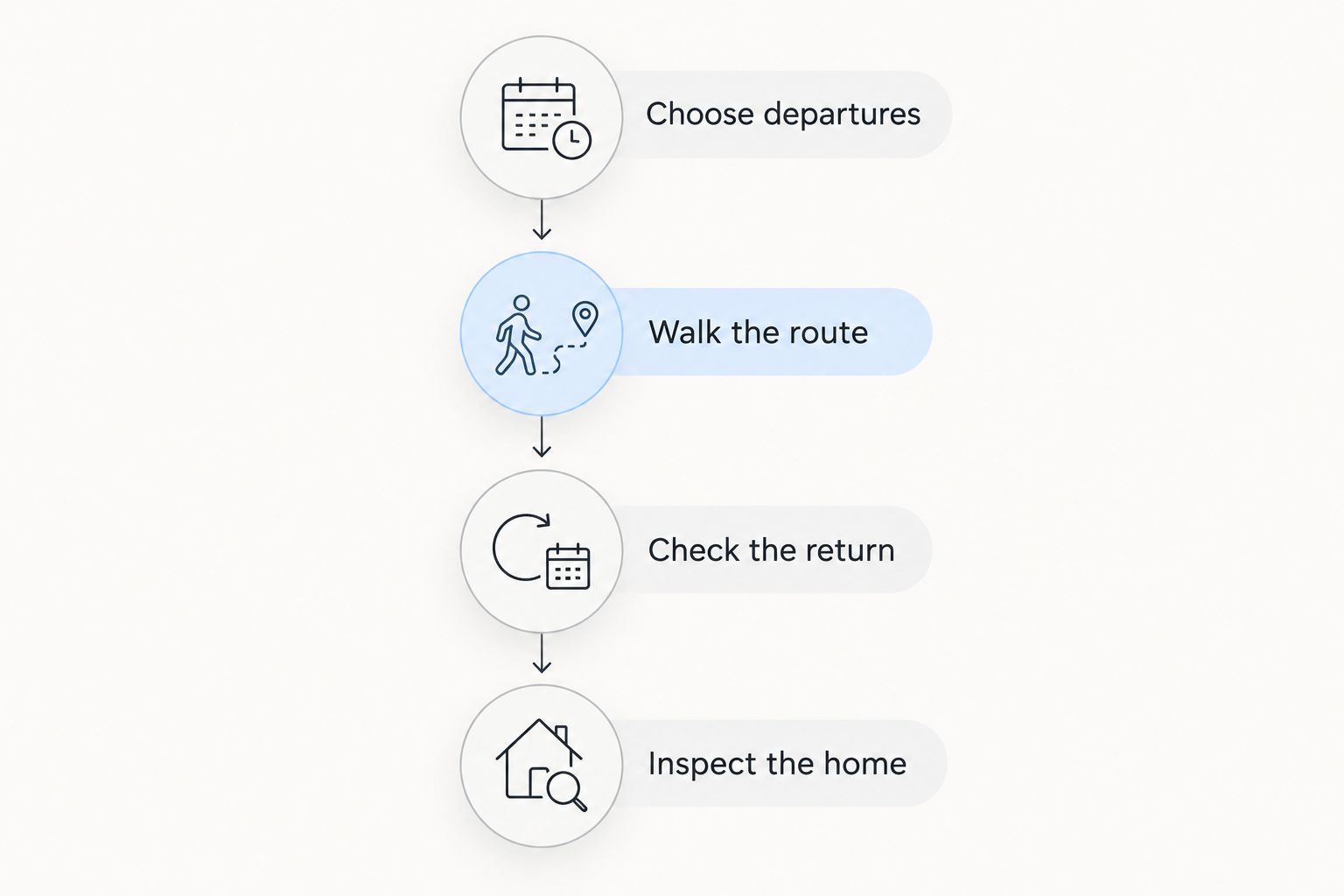
Save the selected journeys and the date you checked them. Schedules change; a remembered train time is not a sound basis for a purchase decision.
Which LIRR neighborhood should you choose?
Start with Mineola if you have no stronger geographic preference. Compare Rockville Centre for village-center living, Port Washington for a North Shore branch setting, Hicksville for branch-direction choices, Babylon for village and waterfront priorities, and Ronkonkoma for a rail-and-airport search.
Then narrow the list to properties that pass your actual commute test. Michelle Lent can help with the residential buying search across Nassau and Suffolk; current MTA schedules establish the rail journey.
Start your station-area home search
Discuss residential buying across Nassau and Suffolk counties with Michelle Lent.
FAQ
What's the best Long Island neighborhood near an LIRR station?
Mineola is this guide's best overall starting point for a station-centered home search. Compare the exact home's station route and your required trains before choosing it over the other locations.
Is Rockville Centre better than Mineola for commuting?
Neither is automatically better for your commute. Rockville Centre offers a Babylon Branch village-center setting, while Mineola provides a Main Line search location; compare your actual departures and final destination.
Does the Port Washington Branch stop at Jamaica?
No, the Port Washington Branch does not serve Jamaica. If your journey requires Jamaica, compare another branch or establish a different route before choosing a home.
Can I walk to the station from any home in these neighborhoods?
No, a community name does not establish a walkable station route. Check the exact address, crossings, platform entrance, and your own walking limit.
Is Ronkonkoma station the same place as MacArthur Airport?
No, Ronkonkoma station and Long Island MacArthur Airport are separate destinations. Include the ground connection when evaluating airport convenience.
Does buying near an LIRR station include commuter parking?
Do not assume a home purchase includes station parking rights. Check the current rules, eligibility, and restrictions with the authority responsible for the parking facility.
What should I verify before buying near an LIRR station in 2026?
Verify current train service, the exact station-access route, rail noise, and property-specific conditions. Add flood and insurance checks where relevant, and inspect the return journey as carefully as the morning trip.
One last thing
The platform entrance matters more than the station pin on a map. Before making an offer in 2026, walk from the front door to the entrance you will actually use, then repeat the route back.
That simple check exposes crossings, detours, and access assumptions that a neighborhood ranking cannot settle. Choose the home for the journey you will make—not the station name in the listing.