
Best overall: Huntington. Best for proximity to a major hospital: Stony Brook. Best for a village-centered routine: Sayville. The best Suffolk County towns for retirees in 2026 depend on your daily travel, housing needs, and preferred pace—not a single countywide ranking.
- Huntington leads this best Suffolk County towns for retirees shortlist for its downtown restaurants, shops, and cultural venues.
- Stony Brook suits retirees prioritizing access to Stony Brook University Hospital; Southold suits a North Fork setting.
- Compare individual addresses for stairs, driving routes, property taxes, and maintenance before choosing a community.
- Michelle Lent provides residential buying, selling, and valuation services across Suffolk County.
Why this matters
A community you enjoy visiting is not automatically a practical place to retire. Your experience depends on the particular home, its surroundings, and the trips you make repeatedly.
For your 2026 search, Michelle Lent provides residential buying, selling, and valuation services across Nassau and Suffolk County. Start with your household’s requirements, then compare communities against those requirements rather than treating a familiar name as the answer.
This guide uses “towns” in the everyday search sense. Huntington, Riverhead, and Southold are towns; Stony Brook is a hamlet, while Port Jefferson and Sayville are incorporated villages. Municipal boundaries matter when you check services and property records.
What makes the best Suffolk County towns for retirees?
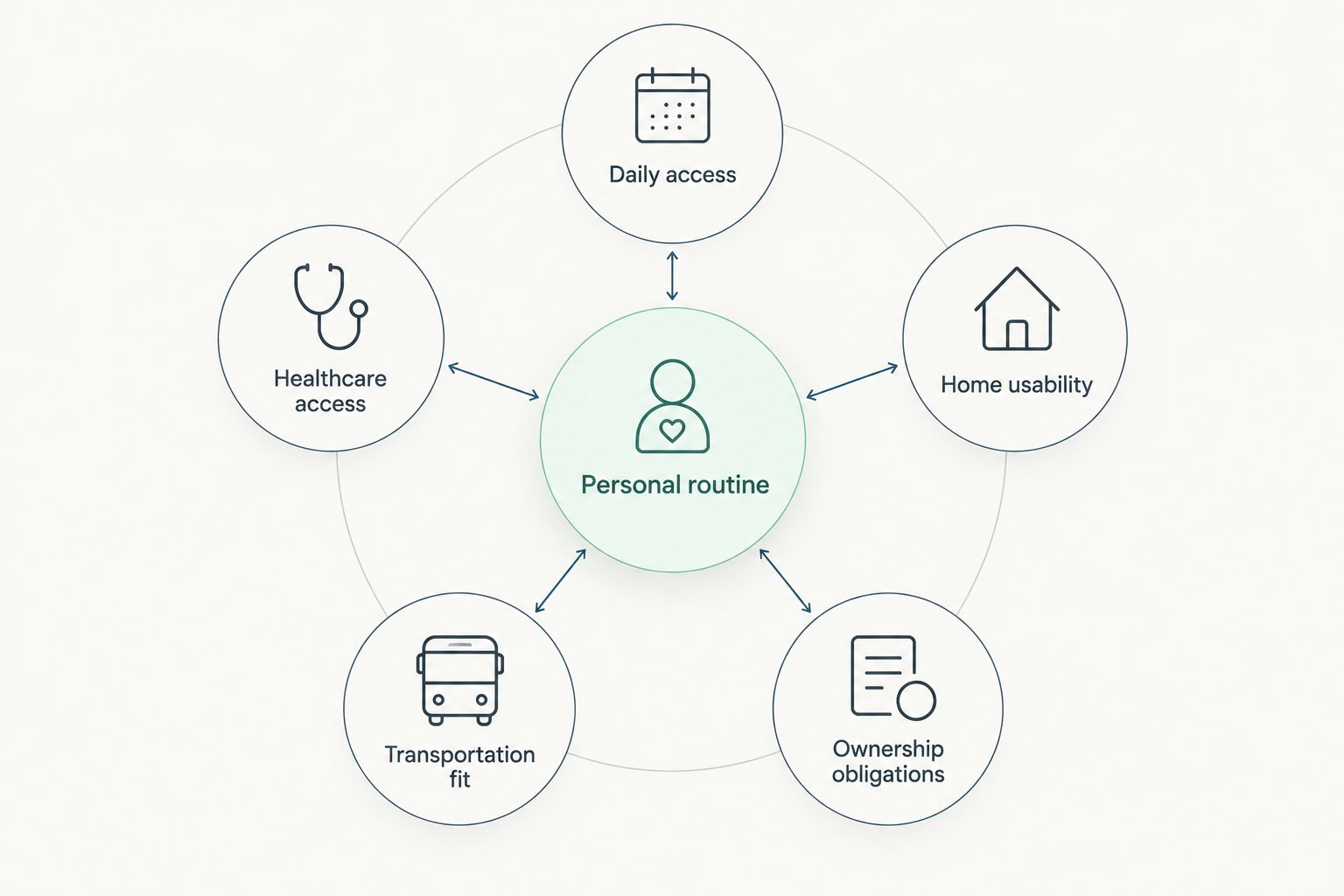
Judge each address against these criteria before you compare downtowns or waterfront views:
- Daily access: Can you reach groceries, prescriptions, and routine appointments without a trip you dislike?
- Healthcare access: Check your actual clinicians and treatment locations, not just the nearest hospital.
- Home usability: Review entrance steps, bedroom placement, bathroom access, laundry, and outdoor maintenance.
- Transportation fit: Separate proximity to a railroad station from the ability to reach it conveniently.
- Ownership obligations: Read the property tax record, insurance terms, utility information, and any association documents.
- Personal routine: Match the setting to how you spend an ordinary weekday, including social activities and errands.
Choose the home that supports your routine, not the address that looks best on a weekend visit. A downtown location loses its appeal if the house requires stairs you want to avoid or maintenance you no longer want to manage.
Suffolk County retirement locations at a glance
These are lifestyle recommendations, not a ranking of property values, medical outcomes, or municipal services. For a 2026 move, verify the details of each property separately.
| Community | Best for | Standout feature | Key limitation to check |
|---|---|---|---|
| Huntington | A downtown-centered retirement | Shops, restaurants, and cultural venues in Huntington village | The railroad station is separate from the downtown core |
| Stony Brook | Access to a major hospital | Stony Brook University Hospital in the community | Hospital proximity does not establish access to your doctors |
| Port Jefferson | A harbor-village lifestyle | Harborfront village and ferry connection to Bridgeport | The railroad station is uphill from the waterfront |
| Sayville | A South Shore village routine | Main Street businesses and a railroad station | Village proximity does not guarantee a step-free home |
| Riverhead | An East End base | Peconic River downtown and access toward both forks | Map recurring trips before selecting an address |
| Southold | A North Fork setting | Hamlet centers, agricultural surroundings, and shoreline settings | Test travel to specialists and destinations farther west |
1. Huntington: best for a downtown-centered retirement
Huntington is the default starting point if you want restaurants, shopping, and cultural destinations to anchor your routine. The downtown area offers an alternative to choosing a home primarily for seclusion.
Distinguish the Town of Huntington from the downtown area commonly called Huntington village. A property elsewhere in the town does not necessarily offer the same access to that commercial center.
Huntington pros:
- Downtown combines dining, shopping, and cultural venues.
- You can evaluate homes against a clearly defined commercial center.
- Huntington has a Long Island Rail Road station for regional travel.
Huntington cons:
- The railroad station and downtown are separate destinations.
- A Huntington mailing address does not establish walking access to downtown.
Best for: Retirees who want outings and errands organized around an established downtown.
Before touring homes in 2026, decide whether downtown proximity or station access matters more. Walk the route from each candidate property rather than relying on a map’s straight-line distance.
Verdict: Buy in Huntington when the specific address supports your preferred downtown routine.
2. Stony Brook: best for access to a major hospital
Stony Brook deserves a place on your shortlist when healthcare geography is a central concern. Stony Brook University Hospital is located here, alongside the university campus and the community’s village-center attractions.
That geographic advantage is not a substitute for checking your own care arrangements. Confirm where your clinicians see patients, whether they accept your coverage, and how you would reach appointments.
Stony Brook pros:
- Stony Brook University Hospital is located in the community.
- The university adds cultural and educational destinations.
- The village center offers a separate setting for local outings.
Stony Brook cons:
- Different clinical services can involve different destinations.
- A Stony Brook address does not establish walking access to the hospital or village center.
Best for: Retirees who place hospital access ahead of a waterfront or downtown-first lifestyle.
For your 2026 comparison, map your actual medical destinations before drawing a search boundary. Include the pharmacy and routine appointments, not only emergency care.
Verdict: Buy in Stony Brook when verified healthcare routes fit your needs.
3. Port Jefferson: best for a harbor-village lifestyle
Port Jefferson combines a working harbor, village businesses, and ferry service to Bridgeport, Connecticut. It suits retirees who want the waterfront to be part of regular outings rather than an occasional drive.
Pay attention to elevation and the separation between destinations. The waterfront village and Port Jefferson railroad station are not interchangeable locations.
Port Jefferson pros:
- The harbor provides a focal point for village outings.
- Restaurants and shops sit within the waterfront village.
- The ferry offers a connection across Long Island Sound.
Port Jefferson cons:
- The railroad station is uphill from the waterfront.
- A harbor-oriented address does not automatically simplify errands elsewhere.
Best for: Retirees who value a harbor setting and expect to use the village regularly.
Walk the exact streets around a candidate home. Check slopes, entrance steps, and the route back from the waterfront; an enjoyable downhill walk tells you only half the story.
Verdict: Buy in Port Jefferson when the terrain and waterfront routine work together.
4. Sayville: best for a South Shore village routine
Sayville suits retirees who want a South Shore base with an established Main Street and a railroad station. Its appeal is the combination of a recognizable village center and regional transportation access.
Start with the activities you expect to repeat. A home that works for grocery trips, appointments, and meeting friends deserves more attention than one selected solely for its village name.
Sayville pros:
- Main Street provides a center for shopping and dining.
- Sayville has a Long Island Rail Road station.
- The village offers a South Shore alternative to the North Shore selections.
Sayville cons:
- Station access still depends on your particular address and route.
- A village location says nothing about interior stairs or maintenance needs.
Best for: Retirees seeking a South Shore village with both Main Street businesses and rail access.
If you consider a property near the water, investigate its flood designation and insurance requirements directly. Apply that same property-level check to waterfront candidates anywhere in Suffolk County.
Verdict: Buy in Sayville when the home supports an easy village-centered routine.
5. Riverhead: best for an East End base
Riverhead is the strongest fit on this list if you want a base near the approaches to both the North Fork and South Fork. Its downtown follows the Peconic River, giving you a defined center to compare with other parts of the town.
Avoid treating the whole town as a single living environment. Evaluate the home’s immediate surroundings and the destinations you will actually use.
Riverhead pros:
- Its location supports trips toward either fork.
- The Peconic River gives downtown a distinct setting.
- You can compare downtown access with a more dispersed routine elsewhere in town.
Riverhead cons:
- A Riverhead address alone does not establish convenient downtown access.
- East End positioning does not eliminate the need to test trips farther west.
Best for: Retirees who expect regular outings across the East End rather than one village alone.
Build a route list before choosing your search area. Include medical care, groceries, family visits, and the destinations that bring you east in the first place.
Verdict: Buy in Riverhead when its East End position improves your actual travel pattern.
6. Southold: best for a North Fork setting
Southold suits retirees who prioritize the North Fork’s agricultural surroundings, hamlet centers, and shoreline settings. Choose it because you want that daily environment, not because a day trip felt like a vacation.
The town includes multiple communities with different relationships to shops and services. Compare addresses within Southold rather than assuming the town name describes a uniform experience.
Southold pros:
- Agricultural surroundings are part of the North Fork landscape.
- Hamlet centers offer distinct places to focus a home search.
- Shoreline settings provide a different environment from the downtown-first choices.
Southold cons:
- Travel to recurring destinations farther west needs a deliberate test.
- A secluded property requires a separate plan for errands and social contact.
Best for: Retirees who actively prefer a North Fork setting over proximity to western Suffolk destinations.
For a 2026 move, spend an ordinary errand day in the area. Include the tasks you cannot skip, not just the places you enjoy visiting.
Verdict: Buy in Southold when the North Fork routine works beyond leisure outings.
How the ranking works
The order favors everyday convenience first, then distinct lifestyle priorities. Huntington is the default because its downtown provides a clear starting point; the remaining recommendations each answer a different need.
This is not a scored market study. No recommendation establishes that a community has lower ownership expenses, better healthcare outcomes, or more suitable homes than another. Those decisions require property records and household-specific checks.
Which Suffolk County community should you choose?
Start with Huntington if you are undecided, then compare it with the community that matches your strongest requirement. Choose Stony Brook for hospital geography, Port Jefferson for harbor life, Sayville for a South Shore village, Riverhead for an East End base, or Southold for a North Fork setting.
For retirees comparing Suffolk County towns, Michelle Lent provides buying, selling, and valuation services. Use those services to connect the location decision with the home you need to buy or sell.
Before making an offer, complete this practical check:
- Visit on 2 weekdays to observe your intended routine.
- Return for 1 weekend visit and compare the experience.
- Test 3 recurring routes: groceries, medical care, and a social destination.
- Review the home’s entrance, bedroom, bathroom, laundry, and maintenance requirements.
These are recommended checks, not market statistics. Keep the same checklist for every finalist so an attractive feature does not distract you from a daily obstacle.
Plan Your Suffolk County Move
Discuss residential buying, selling, or valuation with Michelle Lent.
FAQ
What's the best Suffolk County town for retirees in 2026?
Huntington is this guide’s default choice for retirees seeking a downtown-centered routine. Stony Brook, Port Jefferson, Sayville, Riverhead, and Southold fit different healthcare, waterfront, and location priorities.
Is Stony Brook a good place to retire near a hospital?
Stony Brook is a relevant choice because Stony Brook University Hospital is located there. Check your clinicians’ actual locations, coverage arrangements, and travel routes before selecting a home.
Is Port Jefferson better than Sayville for retirement?
Port Jefferson fits a harbor-village preference, while Sayville fits a South Shore village routine. Compare the specific homes, walking routes, and station access rather than declaring either community universally better.
Should I retire in Riverhead or Southold?
Choose Riverhead for a base near the approaches to both forks, or Southold for a North Fork setting. Test medical, shopping, and family travel from the individual address before deciding.
How do I compare the cost of retiring in Suffolk County?
Compare each property’s tax record, insurance requirements, utilities, maintenance responsibilities, and applicable association obligations. A community name alone does not establish your ownership expenses.
Can I choose a retirement home based on railroad access?
Railroad access is a useful criterion, but station proximity alone is insufficient. Check the route to the station, current service for your destinations, and how you will complete the rest of each trip.
Can Michelle Lent help with a Suffolk County retirement move?
Michelle Lent provides residential buying, selling, and valuation services across Suffolk County. Those services are relevant whether your move involves purchasing a home, selling an existing property, or both.
One last thing
A single-level interior does not guarantee a step-free routine. Inspect the route from parking to the entrance, then continue to the bedroom, bathroom, laundry, and outdoor space you expect to use.
For your 2026 shortlist, let that complete route break the tie between attractive homes. The better retirement choice is the address that removes friction from ordinary days.